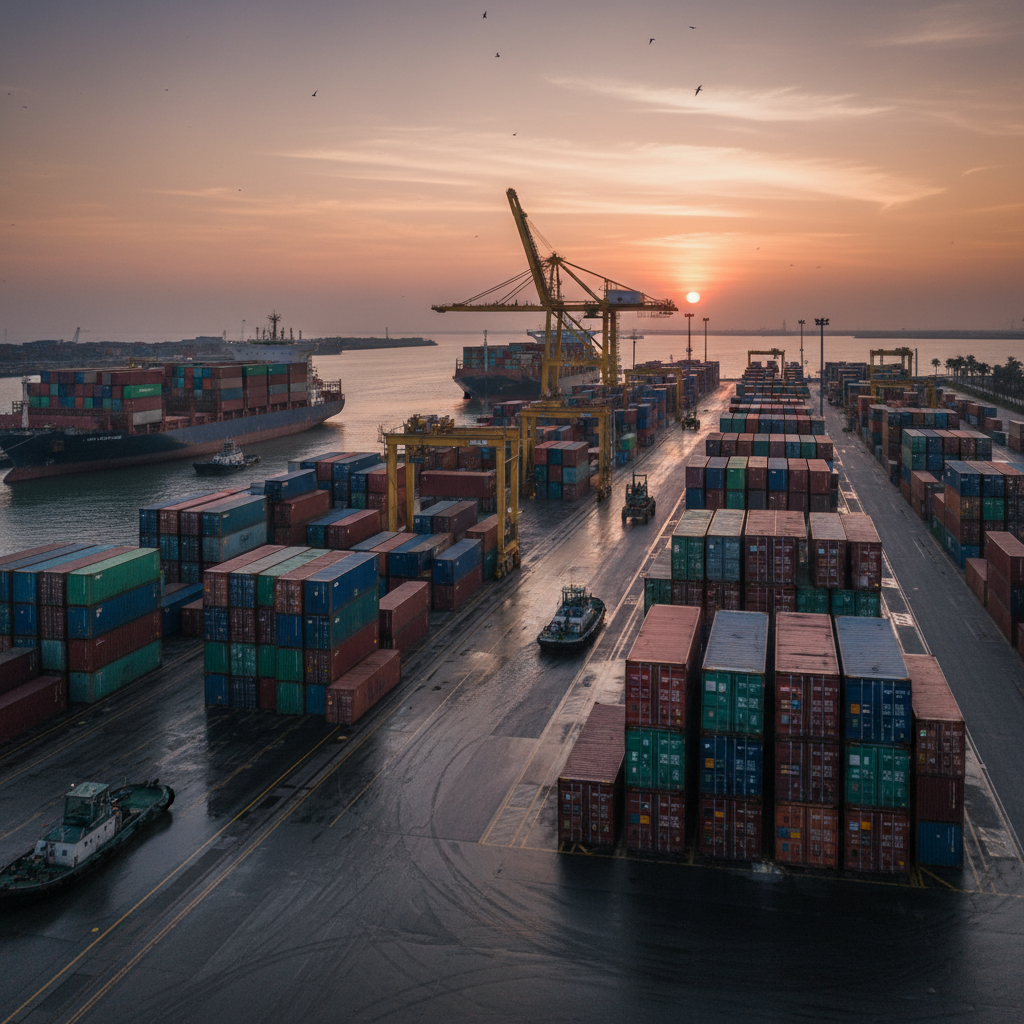
Category: Pain-Solution Guide

  • Unlock Savings: AI Strategies to Slash Empty Container Costs in Food Trade

    Unlock Savings: AI Strategies to Slash Empty Container Costs in Food Trade

    The global food trade is a finely tuned symphony of logistics, but one discordant note often drowns out the potential for profit: empty container costs. Are you routinely repositioning dozens, if not hundreds, of unused shipping containers, watching your operational budget hemorrhage funds? The frustration is palpable, from the port manager grappling with demurrage fees to the CFO seeing profit margins shrink. This silent drain on resources isn’t just an inconvenience-it’s a significant barrier to efficiency and profitability in an already complex supply chain.

    Imagine a world where your empty containers are virtually eliminated, where every shipment is optimized for maximum capacity and minimal waste. It sounds futuristic, but for leaders in the food trade, this vision is within reach. By leveraging advanced artificial intelligence, businesses can transform their logistics, directly addressing the pain of empty container costs and turning a historical liability into a strategic advantage. It’s time to move beyond reactive solutions and embrace a proactive, intelligent approach to freight management.

    The Problem: A Costly Cycle of Inefficiency

    For businesses engaged in the international movement of food products, the issue of empty containers is a pervasive and expensive reality. These aren’t just minor inconveniences; they represent significant financial outlays that chip away at your bottom line. Every empty container that needs to be moved-whether from a distribution center back to a port, or from one region to another to meet demand-incurs a cascade of costs.

    Consider the daily reality: you ship perishable goods from origin A to destination B. The goods are unloaded, but now you have an empty container at destination B. If there’s no immediate outbound shipment from B, that container must be transported back to A, or to another port C where it is needed. This repositioning involves fuel costs, driver wages, port charges, drayage fees, and often, demurrage and detention charges if containers aren’t returned or picked up swiftly. Furthermore, each empty container occupies valuable space, contributes to port congestion, and adds to the carbon footprint of your operations. It’s a non-revenue generating activity that directly drains resources without adding value to your product or service.
    Why This Keeps Happening: Root Causes of Empty Container Woes

    The persistent challenge of empty container costs isn’t typically due to a lack of effort but rather deeply embedded complexities within global supply chains. Several key factors contribute to this ongoing inefficiency:

    1. Imbalanced Trade Routes Many trade lanes are inherently directional. For example, a country that imports heavily but exports little will consistently have an excess of empty containers needing to be repositioned. The food trade often exacerbates this, with seasonal harvests creating surges in outbound shipments that aren’t always matched by inbound cargo.
    2. Lack of Real-time Visibility and Data Silos Without a comprehensive, real-time view of container locations, availability, and upcoming demand across your entire network, effective planning is nearly impossible. Data often resides in disparate systems, making it difficult to connect the dots and identify opportunities to reuse containers.
    3. Manual Planning and Legacy Systems Many logistics operations still rely on manual processes, spreadsheets, or outdated software for container management. These tools simply cannot keep pace with the dynamic nature of global trade or process the vast amounts of data required for optimal repositioning decisions.
    4. Unpredictable Demand and Supply Fluctuations The food trade is particularly susceptible to seasonality, weather events, geopolitical shifts, and sudden market changes. These unpredictable factors make it incredibly challenging to forecast container needs accurately, leading to surpluses in some areas and shortages in others.
    5. Siloed Operational Planning Different departments or entities within a supply chain (e.g., procurement, production, sales, logistics) may operate in isolation. This lack of integrated planning often means container availability isn’t considered early enough in the process, resulting in missed opportunities for container reuse.

    The Short Answer: AI-Powered Optimization for Container Management

    The most effective strategy to reduce empty container costs in the food trade lies in harnessing the power of artificial intelligence and machine learning. By deploying sophisticated AI platforms, businesses can move beyond reactive, manual processes to predictive, optimized container logistics. These systems analyze vast datasets-including historical shipping patterns, current inventory levels, demand forecasts, port congestion, and even external factors like weather-to intelligently match empty containers with future outbound shipments. The goal is to maximize container utilization, minimize repositioning, and dramatically cut associated expenses, transforming empty containers from a persistent headache into a rare occurrence.

    What The Solution Looks Like In Real Life

    Implementing an AI-driven solution for container management isn’t just about software; it’s about a paradigm shift in how you view and manage your logistics assets. In real life, this looks like a seamlessly integrated system that provides unparalleled visibility and control over your container fleet.

    • Predictive Analytics for Demand and Supply AI models continuously learn from historical data and real-time inputs to forecast where and when containers will be needed, and where they will become available. This allows for proactive planning, rather than reacting to shortages or surpluses.
    • Optimized Repositioning Decisions When repositioning is necessary, AI identifies the most cost-effective and efficient routes, considering factors like fuel prices, transit times, and available capacity. It can even suggest multi-stop routes to pick up or drop off other cargo, turning an empty repositioning into a revenue-generating journey.
    • Dynamic Matching of Empty Containers to New Orders As new orders come in, the system instantly cross-references container availability at the closest possible locations. This dynamic matching ensures that an empty container from a recently delivered shipment is immediately earmarked for the next outbound load, drastically reducing dwell times.
    • Collaboration and Network Visibility Advanced platforms can even facilitate collaboration with other trade partners or logistics providers. Imagine sharing container availability data with a trusted network, allowing you to leverage their empty containers or offer yours, creating a more circular and efficient ecosystem.
    • Real-time Alerts and Performance Monitoring Dashboard interfaces provide a bird’s-eye view of your entire container fleet, flagging potential issues like delayed returns or upcoming demurrage charges before they become costly problems. Performance metrics track utilization rates and cost savings, demonstrating clear ROI.

    Step By Step: From Container Chaos to Optimized Control

    Transitioning to an AI-optimized container strategy involves a structured approach. Here’s how you can implement this solution to significantly reduce empty container costs in the food trade:

    1. Assess Your Current Logistics Landscape Start by conducting a thorough audit of your existing container management processes. Identify pain points, analyze historical data on empty moves, and quantify the associated costs. Understand your typical trade lanes, container types, and operational bottlenecks.
    2. Consolidate and Prepare Your Data AI thrives on data. Gather all relevant information, including historical shipping manifests, container tracking data, inventory levels, sales forecasts, and operational costs. Ensure data quality and standardize formats across all sources to create a unified dataset.
    3. Select and Integrate an AI Logistics Platform Research and choose an AI-powered logistics optimization platform, like those offered by Prosessed, that specializes in container management and supply chain efficiency. Ensure it integrates seamlessly with your existing ERP, TMS, and WMS systems.
    4. Configure and Train the AI Model Work with the platform provider to configure the AI model to your specific business rules, network constraints, and cost parameters. Feed it your historical data to train its algorithms for accurate forecasting and optimization specific to your food trade operations.
    5. Pilot Program and Refinement Begin with a pilot program in a specific region or for a particular product line. Monitor the AI’s recommendations and outcomes closely. Use the insights gained to fine-tune the model, adjust parameters, and address any unforeseen challenges.
    6. Roll Out and Scale Once the pilot is successful and you’ve achieved measurable improvements, gradually roll out the AI solution across your entire network. Continuously monitor performance, gather feedback, and iterate to achieve ongoing optimization and maximize your cost savings.
    7. Ongoing Monitoring and Strategic Planning The beauty of AI is its ability to learn and adapt. Regularly review performance dashboards, analyze reports, and use the insights from the AI platform to inform broader strategic decisions regarding network design, sourcing, and distribution.

    How This Looks For Different People

    The benefits of AI-driven container optimization resonate across various roles within the food trade ecosystem:

    • For the Large-Scale Food Distributor A major distributor importing a wide range of frozen goods and exporting processed foods faces complex logistics across multiple continents. AI provides a centralized view of all containers, predicts seasonal demand spikes for both inbound and outbound cargo, and suggests optimal container repositioning to minimize idle time. This translates into millions of dollars saved annually on repositioning fees and expedited shipping.
    • For the Specialty Food Importer A smaller importer specializing in unique artisanal products often deals with less-than-container-load (LCL) shipments and struggles to fill full containers consistently. AI helps them consolidate orders, identify opportunities to share container space with complementary businesses, or strategically plan inbound shipments to align with outbound needs, drastically reducing LCL costs and optimizing full container utilization.
    • For the Logistics & Freight Forwarding Company A freight forwarder managing shipments for numerous food clients across diverse routes needs to maximize asset utilization. An AI platform allows them to dynamically match available empty containers across their client network, reducing the need to source new containers and offering more competitive rates. This enhances their service offering and improves their profit margins per shipment.
    • For the Supply Chain Manager at a Perishable Goods Producer Managing the delicate balance of fresh produce exports requires precision. AI provides real-time visibility into container availability at farms and packing facilities, matching them with immediate outbound vessel schedules. This ensures produce reaches markets fresh, minimizing waste and avoiding costly delays associated with container shortages or repositioning.

    What Might Still Be Holding You Back

    While the benefits are clear, some common concerns might give companies pause before adopting AI for container optimization:

    • Data Integration Challenges The sheer volume and disparate nature of logistics data can be daunting. Integrating data from various sources-ERP, TMS, carrier systems-into a single, usable format for AI can seem like a monumental task.
    • Initial Investment and ROI Justification Implementing advanced AI solutions requires an upfront investment in software, integration, and potentially new hardware or training. Justifying this expenditure to stakeholders requires a clear projection of return on investment.
    • Skepticism About AI Accuracy and Control Some logistics professionals, accustomed to traditional methods, might be wary of delegating critical decisions to an AI system. Concerns about “black box” algorithms or a perceived loss of human control can be a barrier.
    • Organizational Resistance to Change Any significant technological shift can face resistance from employees who are comfortable with existing processes. Change management and clear communication are crucial for successful adoption.
    • Cybersecurity and Data Privacy Concerns Sharing sensitive operational data with an external platform, even a secure one, raises questions about data privacy and the potential for cyber threats, especially in a competitive industry like food trade.

    Common Mistakes To Avoid When Implementing AI for Container Costs

    To ensure a smooth transition and maximize your ROI, steer clear of these pitfalls:

    • Neglecting Data Quality Garbage in, garbage out. AI models are only as good as the data they’re fed. Invest time in cleaning and standardizing your data before implementation.
    • Underestimating Integration Complexity Don’t assume seamless integration. Work closely with your AI provider and IT team to plan for potential challenges when connecting systems.
    • Ignoring Stakeholder Buy-in Without support from management, IT, and especially the logistics team, adoption will falter. Involve key people early and highlight the benefits for their roles.
    • Expecting Instant Perfection AI models require time to learn and optimize. Be patient during the training and pilot phases, and be prepared for continuous refinement.
    • Treating AI as a Standalone Tool AI should augment, not replace, human intelligence. It provides insights and recommendations; human oversight and strategic decision-making remain vital.
    • Failing to Track ROI Regularly measure the impact of the AI solution on your empty container costs, utilization rates, and operational efficiency to demonstrate its value and justify continued investment.

    Your Implementation Checklist for Reducing Empty Container Costs

    Ready to take control of your container logistics? Use this checklist:

    1. ☑ Conduct a comprehensive audit of current container movements and costs.
    2. ☑ Identify all internal and external data sources relevant to container management.
    3. ☑ Assign a cross-functional project team, including logistics, IT, and finance.
    4. ☑ Research and select an AI-powered logistics optimization platform that fits your needs.
    5. ☑ Develop a detailed data integration plan with your chosen vendor.
    6. ☑ Establish clear KPIs and metrics for success (e.g., % reduction in empty moves, cost savings).
    7. ☑ Create a communication plan to inform and train relevant team members.
    8. ☑ Plan for a phased pilot implementation before a full rollout.
    9. ☑ Secure executive sponsorship and budget allocation for the project.
    10. ☑ Outline a strategy for continuous monitoring and model refinement.

    Your 7 Day Plan to Kickstart Empty Container Cost Reduction

    Here’s a rapid action plan to get the ball rolling:

    1. Day 1: Internal Cost Assessment Gather your logistics and finance teams. Identify the top 3-5 trade lanes where empty container costs are highest. Quantify the last 12 months’ spend on repositioning and associated fees in these lanes.
    2. Day 2: Research AI Solutions Dedicate time to researching AI logistics platforms. Focus on those with proven expertise in global trade, container optimization, and supply chain AI. Look at customer testimonials and case studies, especially those in the food trade.
    3. Day 3: Schedule Demos and Consultations Reach out to 2-3 top-tier AI providers for discovery calls and product demonstrations. Be ready to discuss your specific challenges and data landscape. Consider checking out Prosessed’s free trial or demo.
    4. Day 4: Data Audit & Preparation Brainstorm Engage your IT and data teams. Begin mapping out what data sources you have and what might be needed for an AI solution. Discuss potential integration points and data cleanliness requirements.
    5. Day 5: Stakeholder Alignment Meeting Present your initial findings and the potential of AI to key decision-makers. Focus on the quantified cost savings and efficiency gains. Secure provisional buy-in for further investigation.
    6. Day 6: Develop a Pilot Program Outline Work with your core team to sketch out a small, manageable pilot program. Define the scope (e.g., one specific trade lane, 3-month duration), key metrics, and success criteria for this initial phase.
    7. Day 7: Plan Next Steps and Resources Formalize your project plan, assign responsibilities, and identify the internal and external resources (e.g., budget, personnel, IT support) required to move forward with vendor evaluation and pilot implementation. Consider exploring more details on our Products page.

    Optimize Your Food Trade Logistics with Prosessed AI

    The burden of empty container costs in the food trade is no longer an unavoidable reality. By embracing cutting-edge AI and machine learning, businesses can unlock significant savings, enhance operational efficiency, and contribute to a more sustainable global supply chain. Prosessed offers the intelligent solutions you need to transform your logistics, turning a major cost center into a strategic advantage. Don’t let empty containers erode your profits any longer. Start your journey to optimized container management today and discover how powerful data-driven decisions can be.

    Sources

    FAQ

    Q: What is the primary benefit of using AI to reduce empty container costs?

    A: The primary benefit is significant cost reduction through optimized container utilization, minimized repositioning, and avoidance of demurrage and detention fees. It also improves operational efficiency and reduces environmental impact.

    Q: How quickly can I expect to see ROI after implementing an AI solution?

    A: While results vary based on the complexity of your operations, many companies see measurable ROI within 6-12 months, especially after a successful pilot program. The initial investment is often quickly offset by substantial savings on repositioning and idle container costs.

    Q: Is AI secure for handling my sensitive logistics data?

    A: Reputable AI logistics platforms prioritize data security and compliance. They employ robust encryption, access controls, and often adhere to industry-specific regulations to protect your sensitive operational data. Always inquire about their security protocols.

    Q: Does AI replace human logistics planners?

    A: No, AI augments human capabilities. It handles complex data analysis and predictive modeling, providing insights and recommendations that human planners can then use to make more informed and strategic decisions. It frees up planners to focus on higher-value tasks.

    Q: What kind of data is needed for an AI container optimization system?

    A: Key data inputs include historical shipping manifests, real-time container tracking information, inventory levels, sales forecasts, carrier rates, port data, and operational costs. The more comprehensive and accurate the data, the better the AI’s performance.

  • Stuck in Manual Procurement? AI Solutions for Food Wholesalers

    Stuck in Manual Procurement? AI Solutions for Food Wholesalers

    In the fast-paced world of food wholesale, where freshness, efficiency, and thin margins reign supreme, clinging to outdated manual procurement processes is like trying to win a marathon with lead weights. Are you constantly battling stockouts of high-demand items, negotiating prices on the fly, or drowning in a sea of spreadsheets and phone calls just to get your orders placed? The stress of inaccurate forecasting, unexpected price hikes, and mountains of paperwork can feel overwhelming, impacting not only your bottom line but also your team’s morale and your ability to serve customers consistently. It’s a cycle of reactive decision-making that leaves little room for strategic growth or innovation. This persistent struggle with manual procurement challenges can hold back even the most dedicated food wholesalers, preventing them from achieving the agility and profitability needed in today’s competitive market.

    The Problem: The Daily Grind of Manual Procurement Challenges in Food Wholesale

    Imagine your typical day: you start with an inventory check, only to find critical items are running low. A quick scan of last week’s sales tells you one thing, but a sudden surge in demand for a seasonal product tells another. You pick up the phone, calling multiple suppliers to compare prices and availability, often waiting on hold or playing phone tag. Then comes the data entry, manually logging purchase orders, updating stock levels, and trying to reconcile invoices against deliveries that might not perfectly match. Each step is a bottleneck, prone to human error, and eating valuable time that could be spent on customer relationships or market expansion.

    This reactive approach makes long-term planning almost impossible. You might over-order to compensate for unreliable lead times, tying up capital in slow-moving stock, or under-order and miss out on sales. Price fluctuations, especially for perishable goods, can erode your margins before you even realize it. The reliance on individual buyer knowledge means critical information is siloed, and if a key team member is absent, the entire process grinds to a halt. For food wholesalers, where product freshness and rapid turnover are paramount, these manual procurement challenges aren’t just inefficient – they are a direct threat to profitability and customer satisfaction.

    Why This Keeps Happening: Understanding the Root Causes

    It’s not for lack of trying or dedication that manual procurement challenges persist in food wholesale. Several systemic factors contribute to this ongoing struggle:

    1. Legacy Systems and Resistance to Change: Many wholesalers operate on established, often outdated systems that are difficult to integrate or replace. The sheer effort and perceived risk of transitioning to new technology can be daunting, leading to a “better the devil you know” mentality.
    2. Complex Supply Chains: Food wholesale involves a highly intricate web of suppliers, varying product lifecycles, and diverse delivery schedules. Managing this complexity manually is inherently challenging, making it hard to track everything in real-time.
    3. Lack of Centralized Data: Critical information like historical sales, supplier performance, pricing agreements, and inventory levels often resides in disparate spreadsheets, individual inboxes, or even on paper. This fragmented data prevents holistic decision-making.
    4. Time Constraints and “Firefighting”: Procurement teams are constantly reacting to immediate needs – urgent orders, unexpected shortages, or sudden price changes. This constant firefighting leaves little time to strategize, optimize processes, or explore new solutions.
    5. Perishable Nature of Products: The limited shelf life of food products adds immense pressure. Errors in forecasting or delays in ordering can lead to significant waste and financial losses, making manual processes particularly risky.

    The Short Answer: AI-Powered Procurement Automation

    The solution to these deeply ingrained manual procurement challenges for food wholesalers lies in adopting advanced Artificial Intelligence (AI) and machine learning (ML) powered procurement platforms. These intelligent systems automate the repetitive, time-consuming tasks that currently bog down your team, offering proactive insights rather than reactive responses. By leveraging historical data, real-time market trends, and even external factors like weather, AI can predict demand with far greater accuracy, optimize purchasing decisions, and streamline the entire order-to-delivery cycle. It transforms procurement from a reactive, labor-intensive cost center into a strategic, data-driven value driver for your business.

    What The Solution Looks Like In Real Life: Practical AI Implementation

    Imagine a world where your procurement team spends less time on tedious data entry and more time on strategic supplier negotiations and relationship building. With an AI-powered system, this becomes reality. Here’s a glimpse:

    • Automated Demand Forecasting: The AI analyzes years of sales data, seasonality, promotions, and even external factors (like holidays or local events) to predict future demand for each SKU with remarkable precision. No more guessing or relying on gut feelings.
    • Optimized Order Generation: Based on the forecast, current inventory levels, minimum order quantities, and supplier lead times, the system automatically suggests optimal purchase orders. It can even consider price breaks and preferred suppliers.
    • Dynamic Price Negotiation & Comparison: AI continuously monitors supplier catalogs and market prices, flagging discrepancies or opportunities for better deals. Some advanced systems can even automate low-level price inquiries and comparisons across multiple vendors.
    • Real-time Inventory Management: Integrations with your warehouse management system provide a live view of stock levels, reducing the risk of stockouts or overstocking. The system can alert you to potential issues before they become critical.
    • Supplier Performance Tracking: The AI maintains a digital record of supplier reliability, delivery times, and quality, helping you make informed decisions about who to partner with.
    • Streamlined Invoice Reconciliation: Automating the matching of purchase orders, goods received, and invoices significantly reduces manual errors and accelerates payment processes.

    This isn’t about replacing human expertise, but augmenting it, allowing your team to focus on high-value activities that truly require their strategic input. It’s about leveraging technology to overcome the inherent complexities of supply chain management in food wholesale.

    Step By Step: From Manual Chaos to AI-Driven Efficiency

    Transitioning to AI-powered procurement might seem like a monumental task, but it can be approached systematically:

    1. Assess Your Current State: Document your existing manual procurement challenges, pain points, and current software (if any). Identify key metrics like order accuracy, lead times, and inventory holding costs.
    2. Define Your Goals: Clearly articulate what you want to achieve with AI – e.g., reduce stockouts by X%, cut procurement time by Y%, improve forecast accuracy by Z%.
    3. Research & Select a Solution: Explore AI-powered procurement platforms specifically designed for the food wholesale industry. Look for features like demand forecasting, vendor management, and integration capabilities. Consider solutions like Prosessed AI’s product offerings that are tailored for your needs.
    4. Data Preparation & Integration: This is a critical step. Centralize your historical sales data, inventory records, and supplier information. Work with your chosen provider to integrate the AI platform with your existing ERP or accounting software.
    5. Pilot Program & Training: Start with a pilot program on a manageable segment of your product catalog or with a specific set of suppliers. Train your procurement team thoroughly, emphasizing how AI will enhance their roles.
    6. Phased Rollout: Gradually expand the AI solution across more products and suppliers. Continuously monitor performance, gather feedback, and make adjustments as needed.
    7. Continuous Optimization: AI systems learn over time. Regularly review performance metrics, refine parameters, and leverage new features as they become available to maximize efficiency and ROI.

    How This Looks For Different People in Your Organization

    The impact of overcoming manual procurement challenges resonates across your entire organization:

    • For the Procurement Manager: Instead of juggling dozens of spreadsheets and phone calls, you’re now reviewing AI-generated purchase suggestions, fine-tuning them based on strategic insights, and focusing on building stronger supplier relationships. You have real-time visibility into inventory and can proactively address potential issues, transforming your role from reactive “firefighter” to strategic “orchestrator.”
    • For the Sales Team: With fewer stockouts and more accurate inventory, the sales team can confidently promise availability to customers, improving order fulfillment rates and customer satisfaction. They can also provide feedback on new product demands or market trends directly into a system that learns and adapts.
    • For the Warehouse Manager: Predictable deliveries and optimized order quantities mean a more organized warehouse. Less rush and fewer unexpected shipments reduce labor costs and improve operational flow. Reduced spoilage from overstocking translates directly to cost savings.
    • For the Business Owner/CEO: You gain unparalleled visibility into procurement costs, margins, and supply chain health. Data-driven insights enable better financial planning and strategic decision-making. The business becomes more agile, competitive, and resilient to market fluctuations, ultimately boosting profitability and growth potential.

    What Might Still Be Holding You Back

    Even with clear benefits, some common concerns can delay the adoption of AI in procurement:

    • Cost of Implementation: The initial investment in software and integration can seem significant. However, it’s crucial to view this as an investment with a clear ROI through reduced waste, improved efficiency, and better margins.
    • Fear of Complexity: The term “AI” can sound intimidating. However, modern platforms are designed with user-friendly interfaces, abstracting away the underlying technical complexity.
    • Data Quality Concerns: “Garbage in, garbage out” is a valid concern. Addressing this involves a focused effort on data clean-up and establishing robust data entry protocols, which ultimately benefits the business regardless of AI adoption.
    • Resistance from Team Members: Employees might fear job displacement or the need to learn new skills. Effective change management, emphasizing how AI empowers rather than replaces, and providing thorough training are essential.
    • Lack of Internal Expertise: Many wholesalers may not have in-house AI specialists. Partnering with a reputable vendor that offers comprehensive support and implementation services mitigates this challenge.

    Common Mistakes to Avoid When Adopting AI Procurement

    • Underestimating Data Preparation: Skipping or rushing data cleansing will lead to inaccurate forecasts and unreliable system recommendations. Invest time in ensuring your historical data is clean and complete.
    • Ignoring Change Management: Introducing new technology without proper communication, training, and addressing employee concerns can lead to resistance and failed adoption.
    • Expecting Instant Perfection: AI systems, especially those based on machine learning, need time to learn and optimize. Be prepared for a gradual improvement curve and continuous refinement.
    • Over-automating Too Soon: Don’t try to automate everything at once. Start with a pilot project, prove its value, and then gradually expand automation.
    • Choosing a “One-Size-Fits-All” Solution: Food wholesale has unique needs. Select a platform that understands the specific challenges of perishable goods, variable lead times, and complex supplier networks.
    • Neglecting Supplier Collaboration: AI tools enhance, not replace, supplier relationships. Ensure your system supports seamless communication and data exchange with your key vendors.

    Your Implementation Checklist for AI-Powered Procurement

    Use this checklist to guide your journey away from manual procurement challenges:

    1. ✓ Clearly define the specific manual procurement challenges you aim to solve.
    2. ✓ Inventory and clean your historical sales, inventory, and supplier data.
    3. ✓ Research and identify AI procurement solutions tailored for food wholesale.
    4. ✓ Secure executive buy-in and allocate sufficient budget for the project.
    5. ✓ Form a cross-functional implementation team (procurement, IT, operations).
    6. ✓ Develop a clear communication plan for your team about the upcoming changes.
    7. ✓ Establish key performance indicators (KPIs) to measure success.
    8. ✓ Plan for thorough user training and ongoing support.
    9. ✓ Schedule regular reviews to assess performance and identify areas for optimization.
    10. ✓ Foster a culture of continuous improvement and adaptation within your procurement team.

    Your 7-Day Plan to Kickstart AI Procurement Exploration

    This phased approach helps you begin tackling manual procurement challenges this week:

    • Day 1: Internal Brainstorm & Pain Points: Gather your procurement team for an hour. List every single pain point, inefficiency, and manual task related to procurement. Prioritize the top 3-5 most frustrating and time-consuming issues.
    • Day 2: Data Availability Check: Identify where your key procurement data (historical sales, inventory levels, supplier price lists, lead times) currently resides. Is it in spreadsheets, ERP, or scattered? Start thinking about how it could be centralized.
    • Day 3: Research & Learn: Dedicate an hour to researching “AI procurement for food wholesale.” Watch introductory videos, read articles, and start to familiarize yourself with the core concepts and available solutions.
    • Day 4: Supplier Input & Aspirations: Reach out to one or two key suppliers. Ask them about their experiences with automated ordering systems or data sharing. What would make procurement easier for them?
    • Day 5: Cost of Inaction Calculation: Try to estimate the financial impact of your top 1-2 manual procurement challenges. How much do stockouts, overstocking, or manual errors cost your business monthly? This helps build a business case.
    • Day 6: Demo Request & Next Steps: Identify 1-2 promising AI procurement vendors. Visit their websites (like Prosessed.ai) and request a demo or a consultation to see their solutions in action.
    • Day 7: Internal Report & Action Plan: Compile your findings from the week. Outline the biggest opportunities for improvement and present a preliminary recommendation to your leadership on exploring AI procurement solutions further. Consider signing up for an initial consultation or a free trial.

    Transform Your Procurement, Transform Your Business

    Moving beyond the daily struggle of manual procurement challenges in food wholesale is not just about adopting new technology; it’s about embracing a smarter, more strategic way of doing business. By leveraging the power of AI, you can unlock unprecedented efficiencies, reduce costs, minimize waste, and ensure your shelves are always stocked with what your customers need. It’s an investment in your company’s future, enabling agility, growth, and sustained profitability in an ever-evolving market. Don’t let outdated processes hold you back any longer. Start your journey towards intelligent procurement today.

    Ready to revolutionize your food wholesale operations? ✨ Get Started Free with Prosessed AI and see how intelligent automation can transform your procurement processes.

    Sources

    FAQs About AI Solutions for Food Wholesalers

    Q: Will AI procurement replace my current team members?

    A: AI-powered procurement platforms are designed to automate repetitive, data-intensive tasks, not to replace human expertise. Instead, they free up your team to focus on higher-value activities like strategic supplier negotiations, relationship building, and market analysis, enhancing their roles and overall departmental efficiency.

    Q: How long does it take to implement an AI procurement system?

    A: The implementation timeline can vary depending on the complexity of your existing systems, the volume of data, and the scope of the rollout. A pilot program might take a few weeks to a couple of months, with a full-scale rollout potentially spanning several months. Key factors include data preparation and integration with your current ERP or accounting software.

    Q: Is AI procurement suitable for small to medium-sized food wholesalers?

    A: Absolutely. While often associated with large enterprises, many AI procurement solutions are now scalable and accessible for small to medium-sized businesses. The benefits of reduced waste, improved efficiency, and better forecasting are crucial for operations of all sizes, helping even smaller wholesalers compete effectively.

    Q: What kind of data is needed for AI procurement to work effectively?

    A: AI systems thrive on data. Key data inputs include historical sales records, current inventory levels, supplier catalogs, pricing agreements, lead times, and even external market data. The more comprehensive and accurate your data, the better the AI can learn and provide precise recommendations.

    Q: How does AI handle the volatile nature of food prices and seasonality?

    A: This is where AI excels. Machine learning algorithms are designed to identify patterns and anomalies in large datasets. They can analyze historical price fluctuations, seasonal demand shifts, and even external factors (like weather patterns affecting harvests) to make more accurate predictions and procurement recommendations than manual methods, helping to mitigate risk.

  • Solving Food Wholesale Procurement Pains with AI Automation

    Solving Food Wholesale Procurement Pains with AI Automation

    Imagine a bustling food wholesale operation, where orders fly in, inventory constantly shifts, and the clock ticks relentlessly on perishable goods. For many, this isn’t just a picture; it’s a daily battle against inefficiencies, unexpected shortages, and the hidden costs of overstocking. Manual procurement processes, reliant on spreadsheets and phone calls, struggle to keep pace with volatile market demands, leading to wasted time, lost revenue, and unnecessary stress. The food industry, in particular, faces unique challenges with fluctuating prices, seasonal availability, and stringent quality controls. It’s a complex environment where traditional methods often fall short, leaving businesses vulnerable to profit erosion and operational bottlenecks.

    What if you could transform this chaos into a streamlined, predictive system? What if your procurement team could anticipate demand with uncanny accuracy, optimize supplier relationships, and virtually eliminate waste? The answer lies in harnessing the power of artificial intelligence. Prosessed is here to guide you through how AI automates food wholesale procurement, turning your biggest pain points into powerful competitive advantages.

    The Problem: Navigating the Minefield of Manual Food Procurement

    The day-to-day reality of food wholesale procurement without automation is a constant juggling act. Procurement managers are often bogged down by repetitive tasks, spending countless hours on manual data entry, cross-referencing spreadsheets, and chasing down suppliers for pricing and availability updates. This labor-intensive approach leaves little room for strategic decision-making or proactive problem-solving. Stockouts of critical ingredients can halt production or disappoint customers, while overstocking leads to costly spoilage, especially with fresh produce and dairy products.

    Price volatility in the food market adds another layer of complexity. Negotiating with multiple suppliers, monitoring market trends, and ensuring consistent quality across diverse product lines consumes significant resources. Furthermore, the risk of human error is ever-present, leading to incorrect orders, missed delivery windows, or compliance issues. These inefficiencies don’t just impact the bottom line; they erode trust with both suppliers and customers, making growth an uphill battle.

    Why This Keeps Happening: The Root Causes of Procurement Headaches

    The challenges in food wholesale procurement aren’t simply a matter of effort; they stem from systemic issues within traditional operations:

    • Lack of Real-time Data Integration: Information silos prevent a holistic view of inventory, sales, supplier performance, and market conditions. Data is often outdated by the time it’s compiled, making timely decisions impossible.
    • Reliance on Tribal Knowledge: Critical insights about supplier reliability, seasonal pricing, or quality specifics often reside in the heads of experienced employees, making processes vulnerable to staff turnover and difficult to scale.
    • Limited Tools for Forecasting Complex Variables: Traditional forecasting methods struggle with the myriad variables affecting food demand and supply, such as weather patterns, public holidays, local events, and sudden shifts in consumer preferences.
    • Fragmented Supplier Networks: Managing relationships with dozens or even hundreds of suppliers, each with their own ordering systems, pricing structures, and delivery schedules, creates immense administrative overhead.
    • Resistance to Change: Implementing new technologies can seem daunting. The perceived cost, complexity, and fear of disrupting established routines often deter businesses from exploring transformative solutions.

    The Short Answer: AI Transforms Procurement from Reactive to Predictive

    AI automates food wholesale procurement by integrating and analyzing vast datasets to provide predictive insights, optimize ordering processes, and streamline supplier interactions. It shifts procurement from a reactive, manual task to a proactive, strategic function. By leveraging machine learning, AI can forecast demand with high accuracy, identify optimal suppliers, negotiate better terms, and manage inventory levels in real time, significantly reducing waste and maximizing profitability. This allows your team to focus on higher-value activities, ensuring a more resilient and efficient supply chain.

    What The Solution Looks Like In Real Life: A Glimpse into AI-Powered Procurement

    Imagine your procurement team starting their day not with a pile of manual requisitions, but with a predictive dashboard. This dashboard, powered by artificial intelligence, would instantly show optimized order recommendations for the next week, factoring in current inventory, sales forecasts, supplier lead times, and even upcoming weather events or holidays. You would see alerts for potential supply chain disruptions, allowing you to source alternatives before a problem arises.

    In this AI-driven reality, Prosessed AI tools can automatically generate purchase orders, send them to pre-qualified suppliers, and track their delivery status, all without human intervention. The system continuously learns from every transaction, refining its predictions and optimizing sourcing strategies. For instance, if a particular brand of organic produce consistently sells out faster than anticipated, the AI adjusts future orders accordingly. If a supplier frequently delays deliveries, the system can flag them for review or suggest alternative, more reliable options. This proactive, data-informed approach ensures you always have the right products, in the right quantities, at the best possible price, minimizing waste and enhancing customer satisfaction.

    Step By Step: How AI Transforms Your Procurement Process

    Implementing AI to automate food wholesale procurement is a journey, but a highly rewarding one. Here’s a typical progression:

    1. Data Integration and Cleansing: The first step involves consolidating all your disparate data sources-sales records, inventory levels, supplier catalogs, market prices, and historical purchase orders-into a unified platform. Crucially, this data is then “cleansed” to remove inconsistencies and errors, establishing a reliable foundation for AI analysis.
    2. AI Model Training and Calibration: Once data is clean, AI algorithms are trained using this historical information to recognize patterns, predict demand, and identify optimal ordering parameters. This phase often involves a period of calibration, where the system’s recommendations are fine-tuned by your procurement experts.
    3. Automated Demand Forecasting: The AI system begins to predict future demand with increasing accuracy. It considers seasonal trends, promotional activities, external factors like local events or economic indicators, and even real-time sales data to generate precise forecasts for each product.
    4. Supplier Discovery and Negotiation Support: AI can analyze supplier performance metrics-such as delivery reliability, quality ratings, and pricing history-to recommend the best vendors for specific needs. It can also provide data-driven insights to strengthen your negotiation position, helping secure better terms and prices.
    5. Intelligent Order Generation and Management: Based on demand forecasts and optimized supplier choices, the AI automatically generates purchase orders. It manages order fulfillment from creation to delivery, tracking shipments and updating inventory levels in real-time, reducing manual oversight.
    6. Performance Monitoring and Continuous Optimization: The system continuously monitors key performance indicators (KPIs) like stockout rates, spoilage, cost savings, and supplier performance. It learns from new data, adapts to changing market conditions, and suggests further optimizations, ensuring an always-improving procurement cycle.

    How This Looks For Different People In Your Organization

    AI-powered procurement doesn’t just change a process; it transforms roles and empowers your team across the organization:

    Procurement Manager: From Tactical to Strategic

    For the Procurement Manager, AI frees up valuable time spent on repetitive data entry and chasing orders. Instead, they can focus on strategic initiatives: cultivating stronger supplier relationships, exploring innovative sourcing opportunities, negotiating complex contracts, and contributing to long-term business growth. They become a strategic partner, leveraging AI-generated insights to make informed decisions that impact the entire supply chain. They can review performance dashboards, quickly identify areas for improvement, and ensure compliance.

    Warehouse Manager: Optimized Inventory, Reduced Waste

    The Warehouse Manager benefits from highly accurate demand forecasts and optimized inventory levels. They experience fewer stockouts, leading to smoother operations and reduced rush orders. Critically, AI helps minimize overstocking of perishable goods, drastically cutting down on spoilage and associated financial losses. With predictable inflows and outflows, space utilization improves, and labor can be allocated more efficiently, directly impacting the bottom line.

    Finance Department: Enhanced Cost Control and Budgeting

    For the Finance Department, AI brings unprecedented transparency and control over procurement spending. Predictive pricing models and optimized supplier selection lead to significant cost savings. Accurate forecasting improves budgeting, reducing unexpected expenditures and allowing for more precise financial planning. The reduction in waste and spoilage directly translates into higher profit margins and a healthier financial outlook. The detailed data provided by AI also simplifies auditing and compliance reporting.

    What Might Still Be Holding You Back: Addressing Common Concerns

    Despite the clear advantages, some common concerns might give businesses pause before adopting AI for procurement:

    • Cost of Implementation: The initial investment in AI technology and integration can seem significant. However, it’s crucial to view this as an investment with a high ROI, considering the long-term savings from reduced waste, optimized pricing, and increased efficiency. Solutions like those offered by Prosessed are designed to provide scalable entry points.
    • Data Quality Concerns: Many businesses worry their existing data isn’t clean or comprehensive enough for AI. While data quality is vital, modern AI platforms include robust data cleansing and integration tools. Starting with a pilot project can help identify and address data gaps progressively.
    • Fear of Job Displacement: The misconception that AI will replace human jobs is common. In reality, AI augments human capabilities, automating mundane tasks and allowing employees to focus on strategic, creative, and higher-value activities. It elevates roles rather than eliminating them.
    • Complexity of Integration: Integrating new AI systems with existing ERP, inventory, and supplier management platforms can seem daunting. However, leading AI providers offer seamless integration capabilities, often through APIs and pre-built connectors, minimizing disruption.

    Common Mistakes To Avoid When Implementing AI Procurement

    To ensure a smooth and successful transition to AI-driven procurement, steer clear of these pitfalls:

    • Ignoring Data Hygiene: AI is only as good as the data it’s fed. Neglecting data cleansing and ongoing data quality management will lead to inaccurate predictions and unreliable recommendations.
    • Expecting Immediate Perfection: AI models require training and refinement. Don’t expect instant, flawless results. Allow for a learning period and be prepared for continuous optimization based on real-world performance.
    • Underestimating Change Management: Introducing AI is a significant organizational change. Failing to communicate the benefits, train staff adequately, and address concerns can lead to resistance and slow adoption.
    • Not Involving End-Users: Your procurement team’s insights are invaluable. Involve them in the planning, implementation, and feedback stages to ensure the solution meets their needs and gains their buy-in.
    • Overlooking Supplier Integration: For maximum efficiency, consider how your AI system will interact with your key suppliers. Smooth data exchange and communication channels are crucial for automated ordering and tracking.
    • Failing to Define Clear KPIs: Without clear metrics for success (e.g., reduction in waste, improved delivery times, cost savings), it’s difficult to measure the ROI and demonstrate the value of the AI system.

    Your Implementation Checklist: Paving the Way for Smart Procurement

    Ready to automate food wholesale procurement? Use this checklist to guide your journey:

    • Define Clear Objectives: What specific procurement pains do you want to solve (e.g., reduce spoilage by X%, improve on-time delivery by Y%)?
    • Assess Current Systems: Understand your existing ERP, inventory management, and supplier communication tools. Identify integration points.
    • Secure Leadership Buy-In: Ensure executive sponsorship and cross-departmental support for the AI initiative.
    • Cleanse and Prepare Data: Invest time in standardizing and cleaning historical sales, inventory, and supplier data.
    • Select the Right Partner: Choose an AI provider with expertise in food wholesale and a proven track record, like Prosessed AI tools.
    • Pilot with a Small Segment: Start with a manageable product category or supplier group to test the system and gather feedback before a full rollout.
    • Train Your Team: Provide comprehensive training for all users, focusing on how AI will enhance their roles.
    • Establish Success Metrics: Define KPIs to continuously monitor performance and calculate ROI.
    • Plan for Continuous Optimization: Recognize that AI is an ongoing process of learning and refinement.

    Your 7-Day Plan to Explore AI in Food Procurement

    Taking the first steps towards AI automation doesn’t have to be overwhelming. Here’s a concise 7-day plan to get started:

    • Day 1: Internal Assessment & Visioning. Hold a kick-off meeting with key stakeholders (procurement, warehouse, finance) to identify your top 3 procurement pain points and envision how AI could solve them. Define what success looks like.
    • Day 2: Data Audit & Readiness Check. Review your existing data sources. Where is your sales, inventory, and supplier data stored? Assess its cleanliness and accessibility. Identify immediate gaps or inconsistencies.
    • Day 3: Research AI Solutions & Providers. Begin researching AI solutions specifically tailored for food wholesale procurement. Look for platforms that offer demand forecasting, supplier management, and inventory optimization features.
    • Day 4: Supplier Ecosystem Review. Map out your current key suppliers. Consider how integrating them into an automated system would look. Identify any existing digital capabilities they might have.
    • Day 5: Initial Team Briefing & Q&A. Present the concept of AI in procurement to your wider team. Address initial concerns, gather questions, and highlight potential benefits to their daily work.
    • Day 6: Schedule a Demo. Reach out to potential AI vendors, like Prosessed, to schedule a personalized demo. Focus on how their platform addresses your identified pain points. You can even explore a demo with us to see it in action.
    • Day 7: Debrief & Next Steps. Review the demo and internal discussions. Summarize key learnings, clarify remaining questions, and outline the next steps for a more detailed feasibility study or pilot program.

    Unlock a Smarter Future for Your Food Wholesale Business

    The challenges of food wholesale procurement are complex, but the solutions don’t have to be. By embracing AI automation, your business can move beyond reactive problem-solving to a proactive, data-driven strategy that ensures efficiency, reduces waste, and boosts profitability. Imagine a future where every purchasing decision is optimized, every supplier interaction is streamlined, and your team is empowered to achieve more. Prosessed is dedicated to helping businesses like yours thrive in this new era of intelligent procurement. It’s time to transform your supply chain into a competitive advantage.

    Ready to take the next step towards revolutionizing your food wholesale operations? Visit our Products page to learn more about how Prosessed AI can empower your business, or explore our insights and guides for more information.

    Sources

    FAQ – Frequently Asked Questions About AI in Food Procurement

    Q: How quickly can I expect to see ROI from AI procurement?

    A: The timeline for ROI can vary based on the scale of implementation and the current inefficiencies. However, many businesses report seeing tangible benefits, such as reduced waste and improved cost savings, within 6-12 months of a robust AI system’s deployment. Continuous optimization further enhances these returns over time.

    Q: Is my food wholesale business too small for AI automation?

    A: Not at all. Modern AI solutions are increasingly scalable and adaptable to businesses of all sizes. Many platforms offer modular approaches, allowing you to start with specific pain points and expand as your needs evolve. The benefits of efficiency and waste reduction are crucial for smaller businesses looking to compete effectively.

    Q: What kind of data is needed for AI procurement to be effective?

    A: Effective AI procurement relies on historical data including sales records, inventory levels, purchase orders, supplier performance metrics, and even external market data like weather patterns or economic indicators. The more comprehensive and clean the data, the more accurate and powerful the AI’s insights will be.

    Q: Will AI replace my existing procurement team?

    A: AI is designed to augment, not replace, human capabilities. It automates repetitive and data-intensive tasks, freeing your procurement team to focus on strategic activities such as complex negotiations, supplier relationship management, and innovative sourcing. AI empowers your team to be more strategic and efficient.

    Q: How does AI handle the seasonality and perishability of food products?

    A: AI excels at handling these complexities. Its algorithms can analyze vast amounts of historical data, including seasonal trends, expiry dates, and product shelf life, to generate highly accurate demand forecasts. This helps optimize ordering to minimize spoilage and ensure fresh product availability, even with highly perishable items.