Tag: wholesale operations

  • Inventory Turnover Ratio of Food Wholesalers Formula, Calculator & Benchmarks

    Inventory turnover ratio is the number of times your business sells and replaces its inventory during a period. The formula for food wholesalers is: Inventory Turnover Ratio = Cost of Goods Sold (COGS) / Average Inventory Getting this number right is the difference between fresh, profitable stock and a warehouse of write-offs.
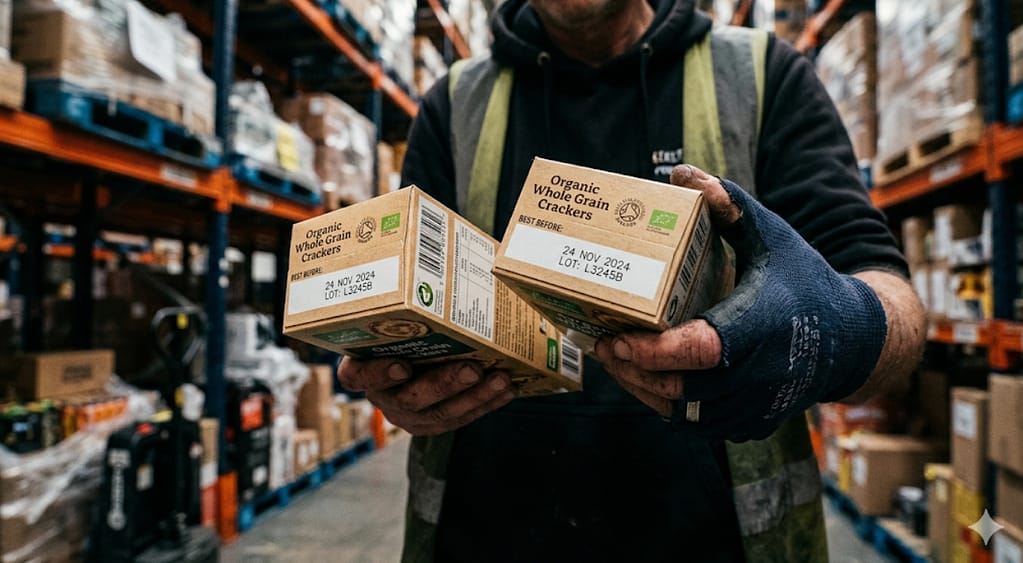
    Table of Contents

    What is the Inventory Turnover Ratio?

    Inventory turnover ratio is a measure of how many times a business sells and replaces its inventory during a certain period of time, often a fiscal year. A high ratio means the stock is faster, less expensive to hold and has more cash flow. A low ratio suggests overstocking, slow demand or poor buying decisions.

    For food wholesalers and distributors, this metric carries even more weight than it does in general retail. Slow-moving stock does not just tie up capital. It spoils, expires, and generates write-offs that eat directly into margins. Understanding and actively managing your inventory turnover ratio is foundational to running a profitable food distribution operation.

    This metric is even more important to food wholesalers and distributors than it is to general retail. Downward stock doesn’t just tie up capital. It goes bad, it goes stale, it causes write-offs that eat into margins. Knowing Inventory Turnover Equation inventory turnover ratio is the foundation of a successful food distribution business.

    Inventory Turnover Ratio = Cost of Goods Sold (COGS) / Average Inventory

    COGS is the direct cost of purchasing the goods you sell. It is the cost you pay to your suppliers for the products going out of your warehouse. Average Inventory smooths out fluctuations over the period. Average Inventory is calculated as:

    Average Inventory = (Opening Stock + Closing Stock) / 2

    So if your opening inventory value is $300,000 and your closing inventory value is $500,000, your Average Inventory is $400,000.

    Alternative Formula Using Net Sales

    Some businesses calculate inventory turnover using Net Sales rather than COGS:

    Average Inventory / Net Sales = Inventory Turnover Ratio

    This version is more typical of retail situations where COGS figures are not easily segregated from overheads, or of companies that use revenue figures to monitor performance. The COGS based formula is generally preferred for food wholesaling because it removes profit margins, giving a cleaner picture of how efficiently you are moving product through the supply chain. Only use the Net Sales version where COGS data is not available or for benchmarking to industry peers who report on a Net Sales basis.

    How to Calculate Inventory Turnover Ratio: Step-by-Step

    Step 1: Determine your COGS

    Remove the Cost of goods sold from your profit and loss statement for the period you are measuring. This is the total cost of goods sold for the period, not your total purchases. Most accounting systems (QuickBooks, Xero, MYOB) will report this directly. This is your COGS number for a fiscal year.

    Step 2: Locate Average Inventory

    Take the value of your inventory at the start of the period (Opening Stock) and at the end of the period (Closing Stock). Mix them and divide with 2. If your warehouse system is capable of real-time inventory tracking, you can also average the monthly closing balances to get a more accurate figure over the course of a full year.

    3. COGS divided by Avg. Inventory

    Apply the formula. Divide your Cost of Goods Sold total by your Average Inventory value. What you are calculating is your inventory turnover ratio (ITR), a number that indicates the number of complete stock cycles you have run through your business in that time frame.

    Step 4: Interpret the Result

    Context matters. A ratio of 6 means you sold out and restocked 6 times in the year, or roughly every two months. Whether that is good or bad is entirely dependent on your product category. Here is a real food wholesale figure worked example
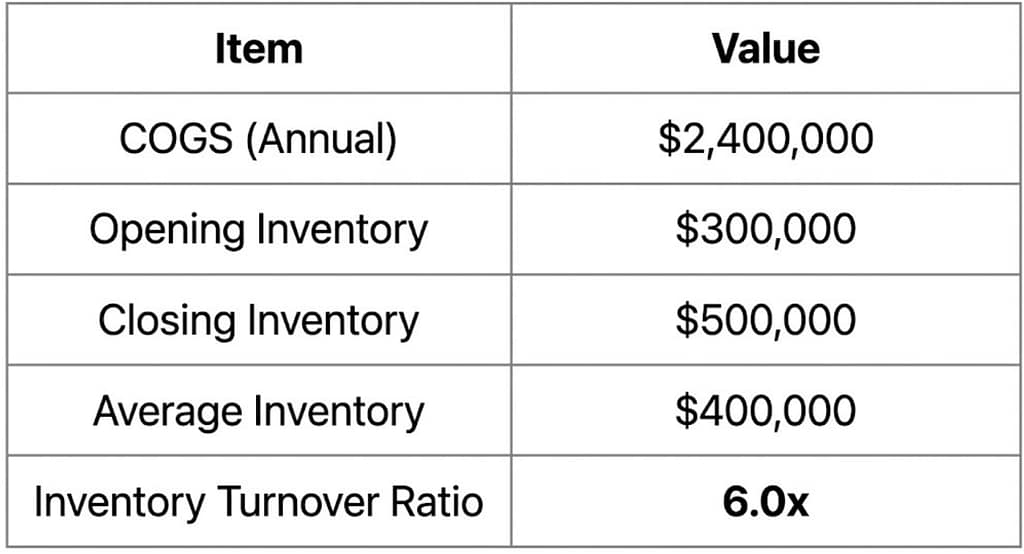
    A ratio of 6.0x means this business is turning its stock every 60 days on average. For a dry goods wholesaler, this sits within an acceptable range. For a fresh produce distributor, it would signal a serious problem.

    Inventory Turnover Ratio Calculator

    To calculate your own ratio, you need three inputs: your COGS for the period, your Opening Inventory value, and your Closing Inventory value. Enter these into the fields below and the calculator will return your Inventory Turnover Ratio along with an interpretation based on food wholesale benchmarks.

    Calculator Fields:

    • COGS ($)
    • Opening Inventory ($)
    • Closing Inventory ($)

    Output: Inventory Turnover Ratio + interpretation against food wholesale benchmarks

    If you want to see how AI-powered inventory management can directly improve the number you just calculated, explore OrderIT by Prosessed AI, built specifically for food distributors managing complex, perishable stock.

    What is a Good Inventory Turnover Ratio?

    Inventory Turnover Benchmarks by Industry

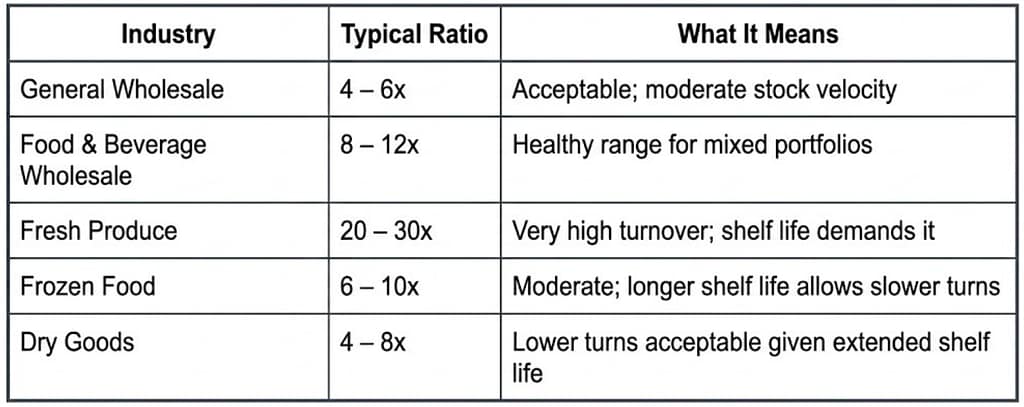
    Once you have your ratio, the next question is whether it is good, acceptable, or a warning sign. Benchmarks vary significantly by product category, which is why food wholesale operations cannot rely on general commerce benchmarks.These are directional benchmarks. Your actual target ratio should account for your specific product mix, supplier lead times, and customer order patterns.
    What Is Inventory Turnover Rate?

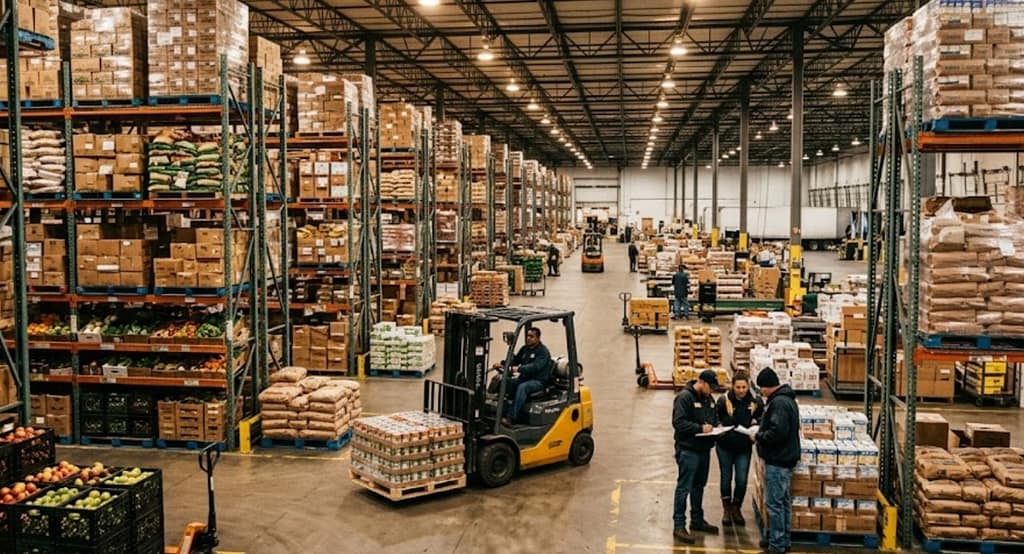
    A low inventory turnover ratio shows that stock is not moving as fast as it should. The consequences for food wholesaling are grim. Slow moving products through your warehouse take longer than their shelf life allows creating spoilage risk and expiry write-offs. Money is tied up in inventory that is not generating revenue, storage and handling costs are accruing, and refrigeration or climate-controlled space is being consumed by product that should have been shipped already. A low ratio is often indicative of overstocking due to inaccurate demand forecasting, poor alignment with suppliers or a product assortment containing SKUs in declining customer demand.

    What is a High Inventory Turnover?

    A high inventory turnover ratio is usually a good sign. It means that your operation is running smoothly, stock is moving fast and cash is not being tied up in your warehouse. For food businesses handling perishables, a high turnover ratio is not aspirational but a necessity. But a ratio that is too high can create problems of its own. Consistently turning stock faster than you can keep up with your reorder cycle puts you at risk for stockouts, missed sales, and customer frustration. You want a ratio that indicates that your stock is being well managed and is not creating supply gaps.

    Days Inventory Outstanding (DIO) is the companion metric to inventory turnover and one that food wholesalers should track alongside the ratio itself.

    DIO = 365 / Inventory Turnover Ratio

    Using the worked example above, a turnover ratio of 6.0x gives a DIO of approximately 61 days. This tells you that it takes your business 61 days, on average, to sell through its inventory.

    For food businesses, DIO has a very practical application. If your DIO exceeds the shelf life of your products, you have a structural problem. A fresh produce distributor with a DIO of 25 days and products that expire in 14 days is, by definition, generating waste. DIO brings the inventory turnover ratio down to a concrete, operationally actionable number that can be compared directly against product shelf life data.

    How to Improve Inventory Turnover in Food Wholesale

    1. Adopt AI-Driven Demand Forecasting

    The most common cause of poor inventory turnover in food distribution is overstocking, which is almost always due to poor demand forecasting. When buying decisions are driven by intuition, historical averages or manual spreadsheet models, the result is buying too much of the wrong products, at the wrong time. AI powered demand forecasting analysis of actual order history, seasonal patterns and buyer behaviour to provide accurate purchase recommendations before you place a supplier order. Prosessed AI’s OrderIT uses this approach to help food distributors reduce overstock by 15 to 20 percent, directly improving turnover ratios. You can also read more on this topic in our guide to demand forecasting for food wholesalers.

    2. Use FEFO (First Expired, First Out) Fulfilment

    FEFO is the fulfilment standard for any business managing products with expiry dates. Unlike FIFO (First In, First Out), which prioritises dispatch order by arrival date, FEFO ensures that the product closest to its expiry date always ships first, regardless of when it arrived. If you don’t have FEFO batch tracking, then warehouse teams will pick the stock that’s most accessible and this can mean that older product sits there until expiry. To implement FEFO in your warehouse, you need to track inventory at the batch level and tie expiry dates to pick sequences. For a comparison of fulfilment methods, see our related page FIFO vs LIFO for food distributors (coming soon).

    3. Detect and Liquidate Slow-Moving SKUs

    In every food wholesale business there are SKUs that slow down the average portfolio turnover. Those slow moving lines are typically hidden deep within the aggregate reporting and only appear when you drill down to SKU-level inventory performance. A review of slow-moving products should routinely identify products whose DIO numbers are greater than the shelf life, SKUs not sold within a defined period, and lines with stock on hand that is significantly greater than expected demand. Once identified, slow movers must be dealt with through promotional pricing, liquidation into secondary markets or removal from the active catalogue, so as to release warehouse space and purchasing capacity.

    4. Reorder Points Tightened with Real-Time Inventory Info

    Static calculations or monthly stock counts will always lag behind actual demand and reorder points. If your procurement team is relying on inventory data that is even a few days old, they are making buying decisions based on an inaccurate picture of what is actually in the warehouse. This is completely changed by real-time inventory visibility. If your re-order points are connected to live stock levels, orders are triggered at exactly the right time, reducing both stockouts and overstock situations. Prosessed AI’s OrderIT platform provides real-time inventory tracking that feeds directly into reorder logic, ensuring your purchasing decisions are always based on current stock reality rather than outdated snapshots.

    5. Align Procurement Cycles to Actual Demand

    Many food wholesalers operate to a fixed procurement cycle, putting purchase orders out on a weekly or monthly basis on a schedule rather than in response to what the market is doing. If demand from customers varies with the seasons, or by product category or even by external events, then a fixed cycle of procurement means you are always buying too much at slow times and too little at peak times. You need to link the buying decision to real sales velocity data to align your procurement cycle to demand signals. ProcurePro by Prosessed AI is built for exactly this, enabling demand-driven procurement that adjusts purchasing frequency and volume based on what your customers are actually ordering, rather than a calendar-driven rhythm.

    Frequently Asked Questions

    The formula for inventory turnover ratio is:

    The standard formula for the inventory turnover ratio is as follows: Inventory Turnover Ratio = Cost of Goods Sold (COGS) / Average Inventory. Average Inventory = (Opening Stock + Closing Stock)/2; In some businesses, Net Sales can substitute COGS, but for food wholesale businesses, the COGS formula is a better indicator of operational stock efficiency.

    What is a good inventory turnover ratio for food distributors?

    For general food and beverage wholesale, an 8 to 12x ratio is healthy. Fresh produce distributors should be targeting 20 to 30x for the very short shelf life of their products. Frozen food operations typically run in the 6 to 10x range, while dry goods distributors are usually in the 4 to 8x range. The right benchmark depends on your unique product mix and shelf life properties of your inventory.

    How frequently should I calculate inventory turnover?

    Most businesses calculate inventory turnover on an annual basis for financial reporting purposes, but food wholesalers benefit from calculating it monthly or even weekly for high-velocity product categories. Tracking the ratio at a shorter frequency allows you to identify deteriorating stock performance before it becomes a spoilage or cash flow problem.

    What is the difference between inventory turnover and days sales of inventory?

    Inventory turnover (or inventory turns) measures how many times you sell through your stock in a period, expressed as a multiple (e.g., 8x). Days Sales of Inventory (DSI), also known as Days Inventory Outstanding (DIO), converts that multiple into days and tells you how long it takes to sell through your average inventory level. DIO = 365 / Inventory Turnover Ratio. Both metrics measure the same underlying dynamic, but DSI is often more intuitive for operational teams because it can be compared directly against product shelf life.

    How does AI improve inventory turnover?

    AI improves inventory turnover by eliminating the inaccuracy that causes most turnover problems in the first place. AI-powered demand forecasting uses historical order data, customer buying patterns, and seasonal signals to generate precise purchase recommendations, preventing both overstock (which slows turnover) and understock (which causes missed sales). AI also enables real-time inventory monitoring that triggers reorders at exactly the right moment, and batch-level tracking that enforces FEFO dispatch to minimise expiry write-offs. The result is a tighter, faster-moving inventory with less waste and better cash performance.

    How Prosessed AI Helps Food Wholesalers Optimise Inventory Turnover

    Inventory turnover is not a metric you improve by watching a dashboard. It improves when the decisions that feed it change. Prosessed AI gives food wholesalers the tools to make better decisions at every point in the inventory cycle.

    OrderIT’s AI demand forecasting looks at your real order history and customer behaviour to make purchase recommendations that reduce overstock by 15 to 20 percent, one of the most direct levers to improve your turnover ratio. Batch-level tracking and FEFO enforcement (first expired, first out) ensures that product that is closest to its expiration date ships first. This helps to reduce write-offs that artificially inflate your average inventory value without contributing to COGS. Real-time inventory visibility means your reorder points are connected to live stock data, not a snapshot from last week’s count. ProcurePro synchronises your procurement cycles to actual demand, so that your buying decisions are driven by what your customers are ordering, not by a calendar.

    This results in higher stock velocity, lower carrying costs, and an inventory turnover ratio that will reflect a truly efficient operation.
    See OrderIT in Action

  • What is a Wholesaler? Definition, Types and Wholesaler vs Distributor

    If you have ever bought a product in a supermarket, the journey that product took to get to the shelf almost certainly went through a wholesaler. Wholesalers are a basic layer of world trade, in between manufacturers and businesses selling to final consumers. However, many entrepreneurs, food importers and business owners new to the wholesale game are unsure of what a wholesaler does, how they are different from distributors, and what it takes to build a wholesale business that can compete in today’s market. This article covers it all: What is wholesale, types of wholesalers, how wholesale differs from retail and distribution, steps to start a wholesale business, and how AI is transforming the food wholesale industry today.

    Table of Contents

    What is Wholesale? Simple Definition

    What is wholesale? Wholesale means buying in bulk, usually from the manufacturer of the product or the producer of the product. Then you sell it at a profit to stores or restaurants or other businesses (not the average person, though).

    Wholesale is defined as the sale of goods in large quantities to business buyers at a price below retail, allowing retailers and other businesses to stock and sell those products at a profit.

    The big difference is the volume and the type of buyer. Wholesalers sell in bulk to businesses, not to the public

    What is Wholesale? Definition and Function

    What does a wholesaler do in the supply chain?

    In a traditional supply chain, the wholesaler is the middleman between the producers of goods and the sellers of goods (to consumers).

    Manufacturer -> Wholesaler -> Retailer / Restaurant / Distributor -> Consumer

    Wholesalers take the supply from manufacturers and spread it among a large number of buyers, reducing the complexity that would otherwise be faced by each side of the chain. Manufacturers don’t have to deal with hundreds of smaller buyer relationships. They don’t need to go producer by producer, negotiating with dozens of them.

    What Does a Wholesale Business Do?

    The core activities of a wholesale business go well beyond simply buying and reselling. A wholesaler typically handles bulk purchasing from one or multiple manufacturers, storage and warehousing of large inventory volumes, break-bulk (dividing large shipments into smaller lots for buyers who cannot take the full amount), providing credit to buyers, managing logistics and delivery, and ensuring product availability across a defined territory or network of buyers.

    Kinds of Wholesalers

    Merchant Wholesalers

    The merchant wholesaler is the most common type. They purchase the goods and take ownership of them . They stock inventory and sell it to retailers or other companies . They own the stock, so they bear the risk of price changes and unsold inventory. Most food wholesale businesses are merchant wholesalers, buying produce, packaged goods or ingredients and selling them to restaurants, grocery chains or food service operators.

    Agents and Brokers

    Brokers and Agentsfer from merchant wholesalers in one critical way: they do not take ownership of the goods. Instead, they facilitate transactions between buyers and sellers in Agents and brokers differ from merchant wholesalers in one important respect: they do not take title to the goods. They don’t buy or sell themselves . They bring buyers and sellers together and charge a commission . For example, a food broker could be the link between a spice importer and a national retailer, never taking possession of the product. This model has lower capital requirements but lower margins.Sales Branches of Manufacturerses Branches

    Some companies like to operate their own wholesale departments rather than using independent wholesalers. A manufacturers’ sales branch is a wholesale business owned and operated by the manufacturer that sells directly to retailers or food service businesses. This gives the manufacturer more control over pricing and distribution, but requires a large investment in operations.

    Speciality Food Distributors

    Wholesale speciality food distributors carry niche or premium product categories such as organic produce, imported ingredients, artisan cheeses, halal or kosher certified goods, ethnic food lines or ingredients supporting specific culinary traditions. This segment is a fast-growing one as food service businesses and retailers look for differentiated products that their competitors will find difficult to duplicate. Speciality food wholesalers typically focus on very defined buyer segments and compete on sourcing relationships and product knowledge as much as price.

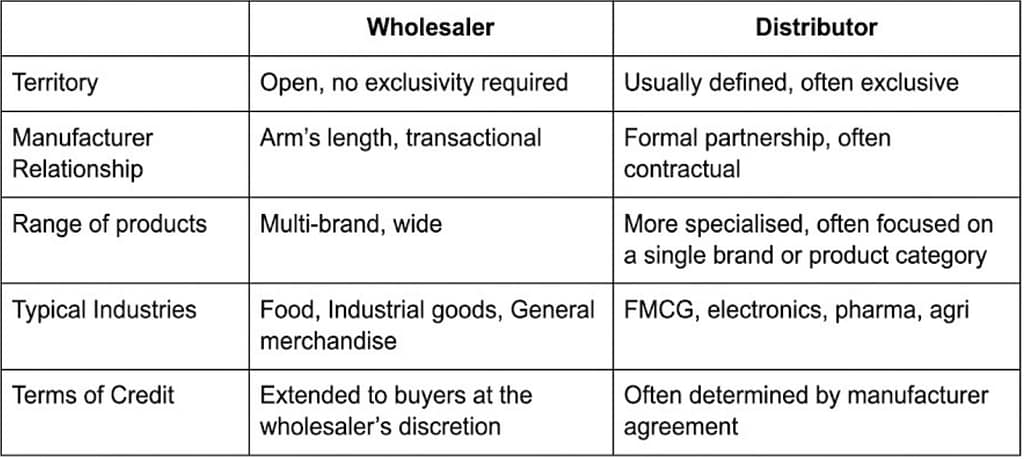
    Wholesaler Vs Distributor: What’s The Difference?Wholesaler and distributor are often used interchangeably, but they are not the same. Knowing the difference is important in structuring supplier relationships, negotiating contracts and selecting the right go-to-market model.

    Wholesaler and distributor are often used interchangeably, but they are not the same. Knowing the difference is important in structuring supplier relationships, negotiating contracts and selecting the right go-to-market model.

    Typically, distributors have a formal (often exclusive) contract with a manufacturer to sell their products in a certain territory. Distributors invest in marketing those products, provide after sales support and are closely aligned with the brand strategy of the manufacturer. A distributor, on the other hand, is free to buy and sell more freely, and often stocks products from a variety of manufacturers without exclusive agreements.

    Wholesale vs Retail: Differences

    Pricing: Retail Price and Wholesale Price

    Wholesale price is the price a business pays when it buys goods in bulk . The retail price is the price a consumer pays at a store. The difference between the two is the retailer’s gross margin. Wholesale prices are cheaper per unit because of the volume commitments, while retail prices factor in the cost of store operations, marketing and consumer-facing service.

    Customer Type B2B v/s. B2C

    Wholesale works in the B2B (business to business) sector. The customer is always another business: a restaurant, a grocery chain, a food service company, or some other wholesaler. Retail is B2C (business to consumer). Retail is selling to the person, i.e. consumer.

    Bulk vs Individual Order Volume

    Wholesale transactions are high-volume by definition. A wholesale order could last a buyer a week or month of inventory. Retail transactions are one-to-one Consumers purchase in quantities appropriate to personal consumption.

    How to Start a Wholesale Business: Key Steps

    1. Choose Your Product Category

    Start with a category where you have sourcing access, market knowledge or a competitive advantage. For example, deep supplier relationships and category expertise are rewarded in food wholesale. Speciality or imported food categories may have higher margins and less direct price competition than commodity goods.

    2. Get a Wholesale Licence

    In most markets, to legally sell goods at wholesale, you’ll need a wholesale licence or business registration. These requirements vary by country, state, and product category. Food wholesale businesses may also need food handling certifications, import licences and to comply with local food safety regulations. Before you put money in, research the specific requirements of your territory.

    3. Find Suppliers

    Supplier relationships are the life blood of any wholesale business. Attend trade fairs, use wholesale marketplace websites, contact producers or manufacturers directly. Food importers need to consider import duties, documentation requirements and logistics costs when sourcing from different countries. ProcurePro — AI procurement for food importers that helps you manage supplier negotiations and monitor procurement costs in real time.

    4. Configure Order Management

    Manual order management is one of the biggest constraints on wholesale growth. Order volumes increase and spreadsheets are no longer manageable to track purchase orders, customer-specific pricing and manage fulfilment across multiple buyers. Introducing a dedicated order management system early on can lead to substantial operational savings. AI order management for food wholesalers automates this entire layer, eliminating manual work and order errors from day one.

    5. Create Your Buyer Network

    Wholesale revenue is buyer relationship-driven. Make direct outreach investments to retailers, restaurants and food service operators in your target market. Digital buyer portals, WhatsApp based ordering and automatic re-order reminders are increasingly effective tools in helping you build and retain a loyal buyer base, without adding to your sales team.

    Challenges Facing Wholesale Businesses Today

    Inventory and Demand Forecasting

    Overstocking ties up working capital. Understocking loses sales and damages buyer trust. For food wholesalers handling perishable goods, getting this balance wrong has direct financial consequences. Traditional forecasting methods based on historical sales averages are no longer sufficient in markets where demand shifts weekly.

    Manual Order Management

    Most wholesale businesses still process a significant portion of their orders manually: emails, WhatsApp messages, phone calls, and spreadsheets. This creates delays, errors, and a ceiling on the number of buyers a sales rep can manage effectively. Wholesale distribution software systematically eliminate this bottleneck.

    Rising Freight and Logistics Costs

    Since 2020, the movement of shipping costs has been variable, impacting food importers the most. Wholesalers generally do not have the data at hand for management of landed cost per unit, optimising container utilisation and finding alternative sourcing routes. AI procurement tools like “ProcurePro, AI procurement for food importers, are built for this particular challenge.

    Buyer Retention In A Competitive Marketplace

    It costs money to obtain a wholesale buyer. To keep them means to have them available at all times, to have competitive prices and a buying experience that is easier than going to a competitor. In a crowded market, the quality of your ordering process, your invoicing speed, and your responsiveness can be as important as your product range.

    How AI Is Revolutionising Food Wholesale Industry

    The food wholesale industry is experiencing a real tech shift. Three years ago, companies were running their operations on WhatsApp, email chains and manual billing, but today they’re adopting AI-powered platforms that automate the repetitive layers of their business and give them real-time visibility they’ve never had before.

    The most impactful changes are happening in order management (automated intake, Biggest changes are in order management (automated intake, processing and confirmation), demand forecasting (AI models to predict reorder points based on buyer behaviour), digital buyer portals (buyers can place and track orders without calling a rep) and invoicing (WhatsApp-based invoicing that eliminates delays). It’s not the big enterprise with a dedicated technology team that’s using these tools. They are middle-sized food importers, speciality wholesalers and regional distributors who have seen that manual operations cannot grow beyond a certain point. The shift from spreadsheets to AI-powered platforms is no longer just an efficiency gain but a competitive necessity.

    If you are evaluating your current tools, it is worth exploring a Pepperi alternative for food wholesale built specifically for food importers and distributors.

    Frequently Asked Questions

    What is the difference between a wholesaler and a retailer?

    A wholesaler sells goods in bulk to businesses at a price below retail. A retailer buys from wholesalers (or directly from manufacturers) and sells individual units to consumers at a retail price marked up The customer of the wholesaler is always a business. The customer of the retailer is the general public.

    What is wholesale price.

    The cost of buying something in bulk from a wholesaler is called the wholesale price. Because of the volume commitment and no consumer facing overhead costs, it is always below the retail price.

    Can anyone shop from a wholesale?

    Most wholesalers require proof of a registered business from buyers. This could require a business licence, tax registration number or proof of trade. Several wholesale marketplaces have expanded to include more buyers, but traditional wholesalers usually require business validation before creating an account.

    What is a wholesale market place

    A wholesale marketplace is a digital platform where multiple wholesalers list products and business buyers can browse, compare, and purchase in bulk. Examples include Faire, Ankorstore, and sector-specific platforms for food and beverage. These platforms reduce the friction of finding wholesale suppliers but typically charge listing or commission fees to sellers.

    How do food wholesale businesses manage inventory?

    Those food wholesalers that have good inventory management use real-time inventory monitoring, automatic reordering when stock is at a minimum, and demand forecasting to predict what buyers will want before they order. Most businesses start with spreadsheets and manual checks, but AI-powered platforms built for food wholesale combine all three layers.

    How Prosessed AI Helps Wholesale Food Businesses Grow

    Prosessed AI is designed specifically for food importers, exporters and wholesale distributors who are outgrowing their manual operations.

    Automated order intake, processing and confirmation across WhatsApp, email and digital buyer portals reduces manual order management work by 40-50 percent. • Sales reps using Prosested AI generate 15 percent more revenue on average because they are spending less time on administrative work and more time building buyer relationships. With real-time inventory visibility and AI demand forecasting, food wholesalers have the data they need to move from overstocking perishables to predicting what buyers need before they ask.

    If your wholesale operation is still managed on spreadsheets, email chains and manual invoicing, the cost isn’t only in time. You’re leaving growth on the table.

  • What is ERP? Definition, Meaning & Examples for Wholesale Businesses

    ERP or Enterprise Resource Planning is software that integrates a company’s key business processes into a single system. But for food wholesalers, traditional ERP is often too much – here’s what really works.

    Table of Contents

    ERP Meaning: What Does ERP Stand For?

    ERP means Enterprise Resource Planning. “ERP” is a suite of integrated software that assists businesses in managing and automating their core operations from one platform.

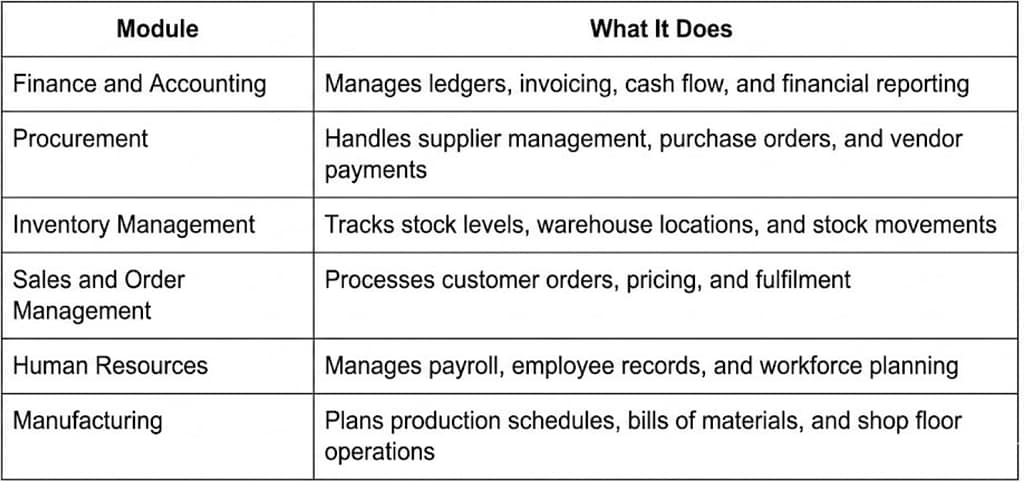
    ERP (Enterprise Resource Planning) is an integrated software application that combines the critical business functions of finance, human resources, procurement, inventory and sales into one unified system. This integration gives organisations a single view of their operations in real time.

    It was introduced in the 1990s, as a development of earlier manufacturing planning tools. Today ERP systems are used in a wide range of industries like retail, healthcare, logistics, and food distribution. The underlying promise is simple: Rather than having disparate tools for accounting, inventory, and purchasing, an ERP connects them so that data can flow freely between departments.

    How Does an ERP System Work?

    An ERP system works by gathering data from all over a business into one database. For instance, when a sales order is made, the system automatically updates inventory levels, triggers procurement if stock is low, and feeds the transaction into the finance module. And because they all run off the same data set, there’s no lag or errors that come from manual handoffs between disconnected tools.

    Core ERP Modules Explained

    How ERP Connects Business Departments

    The core idea of ERP is the “single source of truth.” There are no different spreadsheets or different software for each department, everything is in one system. If a stock count is adjusted in the warehouse, the finance team immediately sees the effect. Procurement issues Purchase order Inventory gets updated No phone call. The shared data layer reduces errors and speeds up decisions, providing leadership with a real-time, accurate view of the business.

    Types of ERP Systems

    On-Premise ERP

    On-premise ERP is installed and hosted on a company’s own servers and infrastructure. The software is licenced to the company and the company is responsible for the hardware maintenance, updates and security. This model gives the most control and customisation, but requires a high upfront investment in hardwarex and IT staff. Most prevalent in large enterprises with dedicated technology teams .

    Cloud ERP

    Cloud ERP ( aka SaaS) is hosted by the vendor on their servers and accessed through the Internet, usually for a monthly or annual fee. Providers handle the infrastructure and upgrades, reducing upfront costs and letting companies deploy faster. For small and mid-sized businesses, the best model for availability and scalability is Cloud ERP systems. Most of the modern ERP vendors (NetSuite, Microsoft Dynamics 365) are cloud first these days.

    Industry-specific ERP

    Industry-specific ERP systems are designed to follow the workflows of a given industry, whether that’s food and beverage, construction, or healthcare. These systems come pre-configured with the relevant compliance requirements, reporting structures and operational logic for that industry, rather than having to heavily customise a generic platform. This is could include things like batch tracking and expiry date management for food businesses, out of the box.

    Hybrid ERP

    Hybrid ERP combines on-premise and cloud deployments. For instance, a company could deploy its core financial modules on local servers for data security, but use cloud applications to access other functions like sales or human resources. This is often the case for companies that are transitioning from legacy on-premise systems to cloud infrastructure, or for companies that operate in regions with different data residency regulations.

    SAP

    SAP is the largest ERP vendor in the world, with its flagship product SAP S/4HANA serving large enterprises across manufacturing, retail, and logistics. SAP is known for its depth and customizability, but implementations are lengthy and expensive, often requiring specialist consultants and multi-year rollout timelines. It is most suited to large organizations with complex, global operations.

    Oracle NetSuite

    Oracle NetSuite is a cloud-based ERP solution that many growing mid-market companies rely on. It’s an all-in-one that handles financials, inventory, order management and CRM. Plus, it’s popular with e-commerce and wholesale businesses. NetSuite is more accessible than SAP, but it still carries steep licencing and implementation costs that can run into six figures.

    Dynamics 365 (Microsoft)

    Microsoft Dynamics 365 is a modular ERP and CRM platform that integrates with the wider Microsoft ecosystem, including Excel, Teams and Power BI. It gives companies more flexibility to buy individual modules rather than the whole suite. Good for mid-to-large businesses already in the Microsoft environment that want tight integration across productivity tools.

    Odoo is

    Odoo is an open source ERP platform that offers a large number of modules including accounting, inventory, purchasing and e-commerce. It’s less expensive than SAP or NetSuite, thanks to its modular pricing structure and open-source foundation. It has a strong community of developers. Odoo is popular with small and medium businesses that need flexibility but still have technical resources for customisation.

    If you are comparing specialized distribution tools against broader ERP platforms, see our detailed breakdown on the Cin7 alternative for food wholesale page.

    ERP vs Specialised Distribution Software: What Food Wholesalers Should Know

    Why Traditional ERP Falls Short for Food Trade

    Traditional ERP systems were designed for the needs of large manufacturing or retail enterprises. For food wholesalers, this mismatch creates real operational problems.

    First, implementation timelines are a serious obstacle. A typical SAP or NetSuite deployment for a mid-sized business takes six to twelve months before it is fully operational. During that window, a food distribution business is managing live orders, perishable stock, and supplier relationships without the system it is paying for.

    Second, the cost is prohibitive for most SMBs. Between licensing, implementation consultants, customization, and training, a full ERP rollout can run into hundreds of thousands of dollars before the first invoice is processed.

    Third, and most critically, generic ERP modules were not built with food trade in mind. Features like First Expiry First Out (FEFO) inventory rotation, perishable batch tracking, and cross-border food compliance are typically not native to standard ERP systems. They need either expensive third party add-ons or custom development, neither of which is fast or easy.

    What food wholesalers actually need

    What food wholesalers really need is a purpose-built distribution platform that fits their specific workflow without the burden of a full ERP implementation.

    That means native batch tracking and expiry management, so FEFO rotation is done automatically, not by spreadsheet. That means AI-based demand forecasting that considers seasonality and supplier lead times for particular food categories. That is mobile-first order management that works the way a food sales rep actually works – taking orders on the go and sending invoices through WhatsApp.

    This is exactly the workflow for which OrderIT, Prosessed AI’s order management product, is built. It starts with the way food wholesale orders really flow, from the sales call to the delivery confirmation, rather than bolting on food-specific features to a generic ERP.

    The essential difference: traditional ERP demands that food companies modify their business processes to adapt to the software. Business adapts to a dedicated distribution platform.

    Benefits of ERP Systems (and Their Limitations)

    ERP Benefits

    Data by department. The single database model breaks down data silos and guarantees that everyone on the team is using the same data. This limits errors that arise from finance, warehouse and sales teams holding their own separate records.

    Improved reporting and visibility. Because all transactions go through a single system, leadership benefits from real-time reporting across the whole business without the need to manually pull data from multiple sources.

    Process automaton ERP systems can automate routine tasks like purchase order creation, invoice matching and triggers for stock replenishment, thereby reducing manual workload and human error.

    Scalability. A good ERP can grow with the business adding new product lines, warehouses and order volume without replacing the system.

    Typical problems and disadvantages of ERP

    Expensive to implement. Beyond the licence fees, there are costs for consultants, custom development, data migration and staff training for ERP projects. Smaller companies often find that they are paying more than they expected.

    Long deployments. Most traditional ERP implementations take six to 12 months. That lag has a direct impact on the operations of a fast-moving food distribution company.

    overengineering Complexity . Most ERP systems have capabilities that small businesses would never use. Managing and paying for that complexity adds overhead but no value.

    Overhead on change mgmt. People need to change the way they work for ERP implementations. Not always a little. Poor adoption is one of the top-cited reasons why ERP projects fail to deliver the expected return on investment.

    ERP for Small and Medium Food Businesses: Is It Worth It?

    For most small and medium food wholesalers, a full ERP system is the wrong tool for the job. The implementation timelines, costs, and complexity that come with platforms like SAP or NetSuite were designed for large enterprises with dedicated IT departments and multi-year technology budgets.

    An SMB food wholesaler does not need an HR module or a manufacturing planning engine. It needs accurate inventory, reliable order processing, supplier procurement, and demand forecasting that works for perishable goods. Implementing a full ERP to get those capabilities is like hiring an entire accounts department when what you needed was one good bookkeeper.

    What the category of food wholesale SMBs actually needs is a lean, purpose-built distribution platform that deploys in weeks, costs a fraction of enterprise ERP, and is already configured for the compliance and operational requirements of food trade. ProcurePro by Prosessed AI is built on exactly this principle, giving food wholesalers native procurement capabilities without the ERP overhead.

    ERP Frequently Asked Questions

    What is ERP?

    ERP means Enterprise Resource Planning. It is a nod to integrated business management software that links core business functions like finance, inventory, procurement, HR and sales onto a single platform.

    What’s the Difference Between ERP and CRM?

    ERP and CRM have different main purposes, but there is some overlap. ERP manages internal business processes like finance, inventory, supply chain, and production. CRM, or Customer Relationship Management software, is all about managing external relationships with customers, including sales pipelines, contact history and marketing activity. Many ERP platforms today have a CRM module, and some vendors offer both as part of an integrated suite.

    Is QuickBooks an ERP software?

    QuickBooks is NOT an Enterprise Resource Planning (ERP) system. This is accounting software that does bookkeeping, invoicing and basic financial reporting. It connects with some inventory and payroll tools, but doesn’t have the cross functional integration of a real ERP. Businesses that are outgrowing QuickBooks tend to look at cloud ERP platforms or industry-specific distribution software.

    What ERP is best for food distribution?

    Traditional ERP systems like SAP or NetSuite are more of a best fit as compared to most food distribution businesses. They are expensive, slow to deploy and lack native food-specific features. Specialised distribution platforms for food wholesalers, like Prosessed AI, provide the same basic features that any distribution platform would have – inventory management, procurement, and order processing – but also come with features that are unique to food, like FEFO batch tracking and AI demand forecasting, and at a fraction of the cost and implementation time.

    How much does an ERP system cost?

    ERP costs vary widely by platform and business size. SAP implementations for mid-sized businesses range from $150,000 to $1 million+ with consulting and customisation included. Oracle NetSuite pricing begins at roughly $30,000 per year for smaller companies but quickly scales depending on the number of users and modules. Odoo is cheaper but customisation still requires development investment. Prosessed AI is built for a specific purpose and is priced at a fraction of those costs. See Prosessed AI pricing for a direct comparison.

    Why Food Wholesalers Choose Prosessed AI Over Traditional ERP

    Food wholesalers evaluating ERP consistently run into the same wall: the platforms built for large enterprise manufacturing are not built for the pace, perishability, and compliance requirements of food distribution.

    Prosessed AI was built from the ground up for this gap. It deploys in weeks, not months, so businesses are not running a live operation on spreadsheets while waiting for an ERP to go live. Its features are food-native by design, covering FEFO inventory rotation, perishable batch tracking, WhatsApp invoicing for field sales teams, and AI-powered demand forecasting calibrated for seasonal and perishable product categories.

    Where SAP or NetSuite implementations routinely run into six figures and require specialist consultants, Prosessed AI is a lean platform priced for the real cost structure of food wholesale SMBs. There are no generic modules to configure around and no functionality you will never use. Every feature maps to a real workflow in a food distribution business.

    If you are evaluating ERP options for your food wholesale operation, the most important question is not which ERP to choose. It is whether ERP is the right category of tool at all.

    See How It Works at Prosessed AI

  • What is Procurement? Definition, Process & Best Practices

    Buying goods is half to four-fifths of what a food wholesaler spends. This fact alone shows how important smart purchasing really is. If not controlled here, growth becomes messy rather than steady. With each shipment that leaves, bad choices eat into profit.

    Table of Contents

    What is Procurement? (Definition)

    Getting what a company needs from scratch It’s more than just buying. The first step is to determine what the real need is and then to look for someone who can supply it. Conversations reveal how transactions emerge from opportunities. Paperwork kicks in when an official request is issued. The cycle continues until they obtain what they expect.

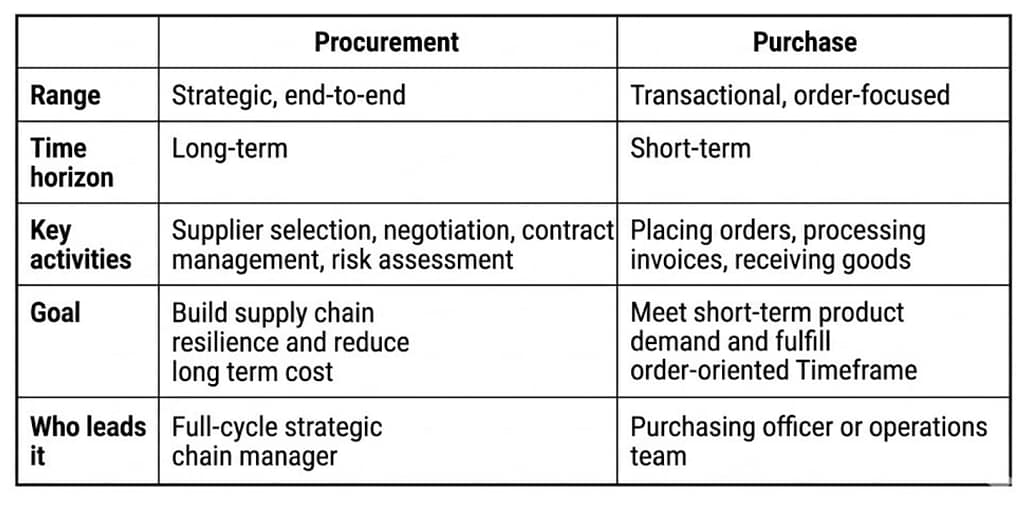
    There is a common confusion about procurement and buying things. One feeds the other, but they are not identical twins.

    Think of purchasing as a single step inside procurement. You cannot have effective purchasing without a procurement strategy behind it, but you can run purchasing without any strategy at all. Most food businesses learn that lesson the hard way.

    Key stat: Some businesses save more when their buying process is well developed. Deloitte found that these teams cut costs by 6 to 12 percent. That edge shows up clearly against others stuck just reacting. Their methods stay narrow, focused only on quick purchases. The gap grows where strategy replaces habit. Numbers like those don’t come from chance.

    Why Does Procurement Matter for Food Wholesalers?

    For a food wholesaler or importer, procurement is not a back-office function. It sits at the core of your business model.

    Here is why it carries more weight in food trade than in almost any other industry.

    Cost control is non-negotiable. Ingredient and product costs make up the vast majority of your revenue outlay. A 2% improvement in procurement pricing can have a bigger impact on your bottom line than a 10% increase in sales volume.

    Supplier reliability determines your reputation. If a supplier sends the wrong spec, ships late, or fails a food safety audit, the problem lands with your customer. In a relationship-driven industry, one bad batch can cost you a contract that took years to build.

    Compliance adds complexity. Food imports involve customs clearance, phytosanitary certificates, country-of-origin labelling, and regulations that change with little warning. Your procurement process needs to account for all of it, not just price.

    Shelf life creates urgency. Unlike general merchandise, food has a clock attached to it. Poor procurement timing means you receive stock that is already burning down its shelf life before it even reaches a buyer.

    Global supply chains introduce volatility. Currency movements, port disruptions, seasonal crop variations, and geopolitical factors all hit food wholesalers harder than most. Procurement is your first line of defence against all of these.

    Stat to know: The Food and Agriculture Organization estimates that post-harvest losses in developing supply chains reach 30% or more. Strong procurement practices at the importer level reduce the downstream impact of this waste significantly.

    Types of Procurement

    Not all procurement works the same way. Understanding the different types helps you build the right process for each category of spend.

    Direct vs. Indirect Procurement

    Direct procurement covers everything that goes directly into the product you sell: raw ingredients, finished goods for resale, packaging. For a food wholesaler, this is the majority of your procurement activity.

    Indirect procurement covers the inputs that keep your business running but do not touch your product: logistics software, warehousing equipment, office supplies, professional services. It is often under-managed in mid-size wholesalers, but the savings opportunity is real.

    Goods vs. Services Procurement

    Goods procurement involves physical products moving through a supply chain. Services procurement covers things like freight forwarding, cold chain logistics providers, quality inspection firms, and customs brokers.

    Both require proper supplier vetting, but services procurement tends to be more relationship-dependent and harder to benchmark.

    Strategic vs. Spot Procurement

    Strategic procurement involves long-term supplier agreements with agreed pricing, volumes, and terms. It creates predictability and typically delivers better unit economics.

    Spot procurement is buying on the open market when you need something quickly. It is sometimes unavoidable, but it should never be your default. Spot buying in food commodities exposes you to price spikes that can wipe out an entire margin on a shipment.

    For food wholesalers: Your highest-volume, most frequently ordered SKUs should always be under strategic procurement agreements. Spot buying should be reserved for opportunistic purchases or genuine supply emergencies.

    The Procurement Process: 8 Key Steps

    A reliable procurement process follows a clear sequence. Every step matters, and skipping any one of them creates risk downstream.

    1. Need Identification

    Someone in the business identifies a requirement: a product line needs restocking, a new customer has placed a forecast order, or a gap in your catalogue needs filling. This is where procurement starts. The need should be documented clearly, including quantity, specification, required delivery date, and budget range.

    2. Supplier Search

    You identify potential suppliers who can meet the requirement. For existing categories, this often means your approved vendor list. For new categories or markets, it requires active sourcing: trade directories, industry events, referrals, or platforms that aggregate supplier data.

    3. RFQ / RFP

    A Request for Quotation (RFQ) or Request for Proposal (RFP) goes out to shortlisted suppliers. For food wholesalers, this should include product specification, required certifications, volume, incoterms, and payment terms. Do not negotiate informally at this stage. Get everything in writing.

    4. Supplier Evaluation

    Compare responses across price, lead time, minimum order quantity, certifications, track record, and financial stability. For food, add quality audits and compliance history to your evaluation criteria. Do not let price be the only deciding factor. A supplier who wins on price but fails on reliability will cost you far more than the saving.

    5. Negotiation

    Negotiate terms with your preferred supplier. Price is one lever. Payment terms, volume rebates, delivery frequency, exclusivity arrangements, and quality guarantees are all part of the deal. The goal is a contract that works for both parties over time, not a one-time win that poisons the relationship.

    6. Purchase Order Issuance

    A formal purchase order (PO) is issued. It is a legally binding document that confirms the agreed quantity, specification, price, delivery date, and payment terms. Every procurement transaction should have a PO. Verbal or email-only agreements are a compliance and audit risk.

    7. Goods Receipt

    When the shipment arrives, it is checked against the PO: quantity, specification, condition, and any required documentation such as certificates of analysis or phytosanitary certificates. Discrepancies are flagged immediately. Accepting non-compliant goods without raising a formal dispute creates problems later.

    8. Invoice and Payment

    The supplier invoice is matched against the PO and the goods receipt note in a three-way match. Once confirmed, payment is processed according to the agreed terms. Late payments damage supplier relationships. Early payment discounts, where available, can improve your cost position meaningfully.

    Food trade tip: Steps 3 through 5 are where most mid-size wholesalers lose money. Unstructured negotiations, verbal commitments, and informal supplier selection lead to poor terms and hard-to-enforce contracts. A centralised procurement system makes every one of these steps auditable and repeatable.

    Common Procurement Challenges (and How to Fix Them)

    Most food wholesalers face the same set of procurement problems. Knowing what they are helps you address them before they become expensive.

    Supplier delays

    Late shipments disrupt your ability to fulfil customer orders. The fix is a combination of realistic lead time expectations built into your planning, buffer stock for your fastest-moving lines, and supplier performance scorecards that track on-time delivery over time. Suppliers who consistently miss dates need to be put on notice or replaced.

    Price volatility

    Food commodity prices move with weather, currency, and geopolitical events. Locking in forward contracts for your high-volume lines reduces exposure. For categories where you cannot contract forward, building supplier relationships that give you early visibility on price changes allows you to adjust pricing to customers before the cost hits you.

    Manual paperwork and process errors

    Spreadsheets, email chains, and paper-based PO approvals create version control problems, approval delays, and errors that cost real money. The answer is centralised procurement software that keeps every order, supplier document, and approval in one place. Teams spend less time chasing information and more time on decisions that matter.

    Poor demand forecasting

    Ordering too much creates wastage and cash flow strain. Ordering too little means lost sales and strained customer relationships. Better demand forecasting, based on your sales history and customer forecasts, gives procurement the visibility it needs to order accurately. This is one of the highest-ROI investments a food wholesaler can make.

    Compliance gaps

    A supplier whose certifications have lapsed, or whose product fails an import inspection, can hold up an entire container at port. Procurement teams need to track supplier certification expiry dates, audit schedules, and import documentation proactively, not reactively.

    See how Prosessed Procure automates supplier selection, demand forecasting, and container planning for food wholesalers. Purpose-built for the complexity of global food trade.

    Procurement Best Practices for Wholesalers in 2026

    The wholesalers outperforming their competitors on procurement share a set of habits that separate them from the rest.

    Centralise your supplier data. Every approved supplier, their certifications, performance history, pricing, and contact details should live in one system. Scattered spreadsheets and email inboxes are not a database. When you need to make a sourcing decision quickly, you need reliable data immediately.

    Build supplier scorecards. Track on-time delivery rate, defect and rejection rate, invoice accuracy, and responsiveness to quality issues for every supplier. Review scores quarterly. Suppliers with consistently strong scores earn preferred status and more of your volume. Suppliers with weak scores get a performance improvement plan or get replaced.

    Use demand forecasting to drive procurement. Working backward from what you expect to sell, rather than forward from what you ordered last time, fundamentally changes the accuracy of your purchasing. Even a basic 13-week rolling forecast built from your sales data will outperform reactive ordering.

    Automate your purchase orders. Manual PO creation is slow and error-prone. Automated PO generation, triggered by reorder points or forecast requirements, removes the human delay and reduces mistakes. Your team’s time is better spent on supplier relationships and strategic decisions.

    Adopt AI tools for smarter sourcing. AI is now being used in food procurement to identify alternative suppliers during disruptions, flag anomalies in pricing data, optimise container fill rates, and predict supplier risk. These are no longer tools that only enterprise businesses can access. Prosessed Procure brings this capability to mid-market food wholesalers and importers without the enterprise price tag.

    Standardise your contracts. Every supplier relationship should be governed by a written agreement that covers price, payment terms, quality standards, audit rights, and termination conditions. Standard contract templates save time and protect you when disputes arise.

    Stat: A McKinsey analysis of consumer goods companies found that top-quartile procurement functions achieved two to three times higher cost savings than median performers, primarily through better supplier management and demand-driven purchasing.

    How AI is Changing Procurement in 2026

    AI has moved from a theoretical advantage to a practical one for food wholesalers. Here is what it is doing right now.

    Automated demand-driven purchasing. AI systems analyse your sales history, seasonal patterns, and customer forecast data to generate procurement recommendations automatically. Instead of a procurement manager spending hours reviewing spreadsheets, the system surfaces what to order, from whom, and when.

    Automated supplier selection. When a new sourcing need arises, AI can score potential suppliers against your criteria in seconds, factoring in price, lead time, certification status, and historical performance. What used to take days of manual comparison happens in minutes.

    Container optimisation. For food importers, container fill rate has a direct impact on landed cost per unit. AI-driven container planning tools calculate the optimal mix of SKUs to maximise fill rate across every shipment, reducing the freight cost allocated to each product line.

    Real-time analytics. AI dashboards give procurement teams live visibility into order status, supplier performance, spend by category, and budget versus actual. The insight that used to arrive in a monthly finance report is now available immediately, which means you can act on it before problems compound.

    Risk monitoring. AI tools can monitor supplier news, geopolitical developments, and commodity price feeds to flag potential supply chain risks before they materialise. For food importers managing suppliers across multiple countries and time zones, this kind of early warning is genuinely valuable.

    The Prosessed difference: Prosessed Procure is built specifically for the food trade. It brings together demand forecasting, supplier management, container planning, and AI-powered ordering in a single platform designed for the way food wholesalers actually work. Food businesses using Prosessed report a 10 to 15% reduction in wastage.

    Key Procurement KPIs to Track

    If you are not measuring procurement performance, you are not managing it. These are the metrics that matter most for food wholesalers.

    Cost savings rate. The percentage reduction in unit costs achieved through negotiation, supplier switching, or volume consolidation over a defined period. This is your most direct measure of procurement value.

    Supplier lead time. The average time from PO issuance to goods receipt by supplier. Track this over time for each supplier. Increases in average lead time are an early warning signal of supplier capacity or operational problems.

    Purchase order cycle time. How long does it take from a procurement need being identified to a PO being issued? Long PO cycle times usually mean manual bottlenecks or approval chain issues. The target for most wholesalers should be under 24 hours for standard orders.

    Supplier defect and rejection rate. The percentage of goods received that fail your quality checks. A rising rejection rate from a specific supplier needs to be addressed immediately, both with the supplier directly and in your sourcing risk assessment.

    Spend under management. The proportion of your total procurement spend that goes through your formal procurement process versus informal or ad hoc purchasing. Higher spend under management means better visibility, better terms, and fewer compliance risks. Most mid-size wholesalers should be targeting 85 to 90% or above.

    Practical tip: Start tracking these five KPIs even in a spreadsheet if you do not have a procurement system yet. The discipline of measurement changes behaviour. Once you have three to six months of data, you will have a clear picture of where the value is being lost and what to fix first.

    FAQs About Procurement

    What is the difference between procurement and supply chain management?

    Procurement is one function within the broader supply chain. Supply chain management covers the end-to-end flow of goods from raw material to end customer, including procurement, logistics, warehousing, and distribution. Procurement focuses specifically on sourcing and acquiring the inputs your business needs.

    What are the four main stages of procurement?

    The four core stages are: identifying the need, selecting and engaging a supplier, executing the purchase (including PO and delivery), and reviewing supplier performance. In practice, these stages repeat in a continuous cycle rather than as a one-time event.

    What is the difference between procurement and purchasing?

    Procurement is the full strategic process of sourcing and acquiring goods or services, including supplier selection, negotiation, and contract management. Purchasing is the transactional step within that process: placing the order and processing the payment. Purchasing is a subset of procurement.

    What is AI procurement?

    AI procurement refers to the use of artificial intelligence tools to automate and improve procurement decisions. This includes demand forecasting, automated PO generation, supplier scoring, risk monitoring, and spend analytics. For food wholesalers, AI procurement tools reduce manual workload and improve ordering accuracy significantly.

    What is wholesale procurement software?

    Wholesale procurement software is a platform that centralises and automates the procurement process for wholesale businesses. It typically includes supplier management, PO creation and tracking, demand forecasting, and performance reporting. Purpose-built tools like Prosessed Procure are designed specifically for the needs of food wholesalers and importers, unlike generic ERP procurement modules.

    How does food procurement differ from general procurement?

    Food procurement carries additional complexity around shelf life, food safety certification, import compliance, cold chain requirements, and commodity price volatility. Supplier qualification in food procurement involves food safety audits and certification tracking that are not required in most other industries. The perishable nature of the product also means that timing and lead time precision matter far more than in non-perishable categories.

    Ready to Transform Your Procurement?

    Food wholesalers already saving 10 to 15% on wastage are using Prosessed to automate their procurement, sharpen their demand forecasting, and take control of their supply chain from supplier to container to customer.

    Start free on Prosessed today

    Related reading: