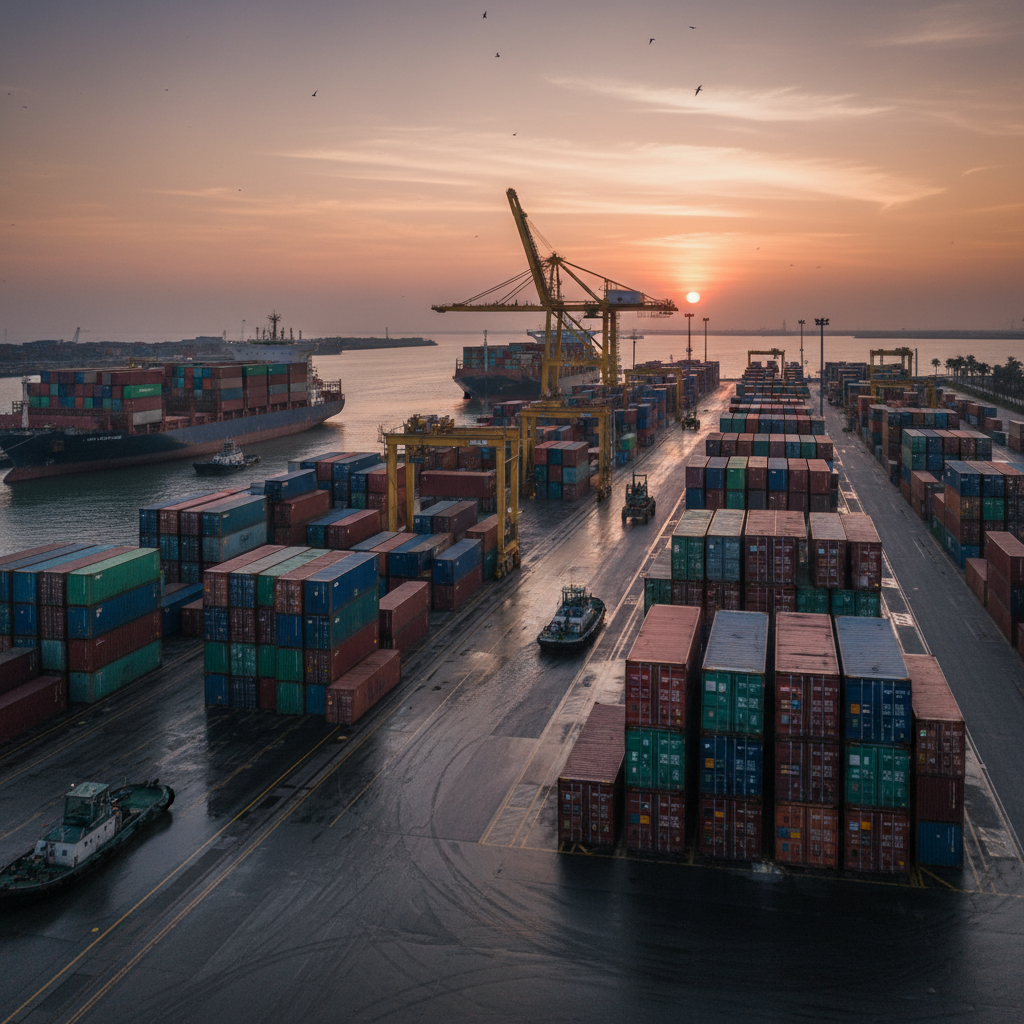
The global food trade is a finely tuned symphony of logistics, but one discordant note often drowns out the potential for profit: empty container costs. Are you routinely repositioning dozens, if not hundreds, of unused shipping containers, watching your operational budget hemorrhage funds? The frustration is palpable, from the port manager grappling with demurrage fees to the CFO seeing profit margins shrink. This silent drain on resources isn’t just an inconvenience-it’s a significant barrier to efficiency and profitability in an already complex supply chain.
Imagine a world where your empty containers are virtually eliminated, where every shipment is optimized for maximum capacity and minimal waste. It sounds futuristic, but for leaders in the food trade, this vision is within reach. By leveraging advanced artificial intelligence, businesses can transform their logistics, directly addressing the pain of empty container costs and turning a historical liability into a strategic advantage. It’s time to move beyond reactive solutions and embrace a proactive, intelligent approach to freight management.
The Problem: A Costly Cycle of Inefficiency
For businesses engaged in the international movement of food products, the issue of empty containers is a pervasive and expensive reality. These aren’t just minor inconveniences; they represent significant financial outlays that chip away at your bottom line. Every empty container that needs to be moved-whether from a distribution center back to a port, or from one region to another to meet demand-incurs a cascade of costs.
Consider the daily reality: you ship perishable goods from origin A to destination B. The goods are unloaded, but now you have an empty container at destination B. If there’s no immediate outbound shipment from B, that container must be transported back to A, or to another port C where it is needed. This repositioning involves fuel costs, driver wages, port charges, drayage fees, and often, demurrage and detention charges if containers aren’t returned or picked up swiftly. Furthermore, each empty container occupies valuable space, contributes to port congestion, and adds to the carbon footprint of your operations. It’s a non-revenue generating activity that directly drains resources without adding value to your product or service.
Why This Keeps Happening: Root Causes of Empty Container Woes
The persistent challenge of empty container costs isn’t typically due to a lack of effort but rather deeply embedded complexities within global supply chains. Several key factors contribute to this ongoing inefficiency:
- Imbalanced Trade Routes Many trade lanes are inherently directional. For example, a country that imports heavily but exports little will consistently have an excess of empty containers needing to be repositioned. The food trade often exacerbates this, with seasonal harvests creating surges in outbound shipments that aren’t always matched by inbound cargo.
- Lack of Real-time Visibility and Data Silos Without a comprehensive, real-time view of container locations, availability, and upcoming demand across your entire network, effective planning is nearly impossible. Data often resides in disparate systems, making it difficult to connect the dots and identify opportunities to reuse containers.
- Manual Planning and Legacy Systems Many logistics operations still rely on manual processes, spreadsheets, or outdated software for container management. These tools simply cannot keep pace with the dynamic nature of global trade or process the vast amounts of data required for optimal repositioning decisions.
- Unpredictable Demand and Supply Fluctuations The food trade is particularly susceptible to seasonality, weather events, geopolitical shifts, and sudden market changes. These unpredictable factors make it incredibly challenging to forecast container needs accurately, leading to surpluses in some areas and shortages in others.
- Siloed Operational Planning Different departments or entities within a supply chain (e.g., procurement, production, sales, logistics) may operate in isolation. This lack of integrated planning often means container availability isn’t considered early enough in the process, resulting in missed opportunities for container reuse.
The Short Answer: AI-Powered Optimization for Container Management
The most effective strategy to reduce empty container costs in the food trade lies in harnessing the power of artificial intelligence and machine learning. By deploying sophisticated AI platforms, businesses can move beyond reactive, manual processes to predictive, optimized container logistics. These systems analyze vast datasets-including historical shipping patterns, current inventory levels, demand forecasts, port congestion, and even external factors like weather-to intelligently match empty containers with future outbound shipments. The goal is to maximize container utilization, minimize repositioning, and dramatically cut associated expenses, transforming empty containers from a persistent headache into a rare occurrence.
What The Solution Looks Like In Real Life
Implementing an AI-driven solution for container management isn’t just about software; it’s about a paradigm shift in how you view and manage your logistics assets. In real life, this looks like a seamlessly integrated system that provides unparalleled visibility and control over your container fleet.
- Predictive Analytics for Demand and Supply AI models continuously learn from historical data and real-time inputs to forecast where and when containers will be needed, and where they will become available. This allows for proactive planning, rather than reacting to shortages or surpluses.
- Optimized Repositioning Decisions When repositioning is necessary, AI identifies the most cost-effective and efficient routes, considering factors like fuel prices, transit times, and available capacity. It can even suggest multi-stop routes to pick up or drop off other cargo, turning an empty repositioning into a revenue-generating journey.
- Dynamic Matching of Empty Containers to New Orders As new orders come in, the system instantly cross-references container availability at the closest possible locations. This dynamic matching ensures that an empty container from a recently delivered shipment is immediately earmarked for the next outbound load, drastically reducing dwell times.
- Collaboration and Network Visibility Advanced platforms can even facilitate collaboration with other trade partners or logistics providers. Imagine sharing container availability data with a trusted network, allowing you to leverage their empty containers or offer yours, creating a more circular and efficient ecosystem.
- Real-time Alerts and Performance Monitoring Dashboard interfaces provide a bird’s-eye view of your entire container fleet, flagging potential issues like delayed returns or upcoming demurrage charges before they become costly problems. Performance metrics track utilization rates and cost savings, demonstrating clear ROI.

Step By Step: From Container Chaos to Optimized Control
Transitioning to an AI-optimized container strategy involves a structured approach. Here’s how you can implement this solution to significantly reduce empty container costs in the food trade:
- Assess Your Current Logistics Landscape Start by conducting a thorough audit of your existing container management processes. Identify pain points, analyze historical data on empty moves, and quantify the associated costs. Understand your typical trade lanes, container types, and operational bottlenecks.
- Consolidate and Prepare Your Data AI thrives on data. Gather all relevant information, including historical shipping manifests, container tracking data, inventory levels, sales forecasts, and operational costs. Ensure data quality and standardize formats across all sources to create a unified dataset.
- Select and Integrate an AI Logistics Platform Research and choose an AI-powered logistics optimization platform, like those offered by Prosessed, that specializes in container management and supply chain efficiency. Ensure it integrates seamlessly with your existing ERP, TMS, and WMS systems.
- Configure and Train the AI Model Work with the platform provider to configure the AI model to your specific business rules, network constraints, and cost parameters. Feed it your historical data to train its algorithms for accurate forecasting and optimization specific to your food trade operations.
- Pilot Program and Refinement Begin with a pilot program in a specific region or for a particular product line. Monitor the AI’s recommendations and outcomes closely. Use the insights gained to fine-tune the model, adjust parameters, and address any unforeseen challenges.
- Roll Out and Scale Once the pilot is successful and you’ve achieved measurable improvements, gradually roll out the AI solution across your entire network. Continuously monitor performance, gather feedback, and iterate to achieve ongoing optimization and maximize your cost savings.
- Ongoing Monitoring and Strategic Planning The beauty of AI is its ability to learn and adapt. Regularly review performance dashboards, analyze reports, and use the insights from the AI platform to inform broader strategic decisions regarding network design, sourcing, and distribution.
How This Looks For Different People
The benefits of AI-driven container optimization resonate across various roles within the food trade ecosystem:
- For the Large-Scale Food Distributor A major distributor importing a wide range of frozen goods and exporting processed foods faces complex logistics across multiple continents. AI provides a centralized view of all containers, predicts seasonal demand spikes for both inbound and outbound cargo, and suggests optimal container repositioning to minimize idle time. This translates into millions of dollars saved annually on repositioning fees and expedited shipping.
- For the Specialty Food Importer A smaller importer specializing in unique artisanal products often deals with less-than-container-load (LCL) shipments and struggles to fill full containers consistently. AI helps them consolidate orders, identify opportunities to share container space with complementary businesses, or strategically plan inbound shipments to align with outbound needs, drastically reducing LCL costs and optimizing full container utilization.
- For the Logistics & Freight Forwarding Company A freight forwarder managing shipments for numerous food clients across diverse routes needs to maximize asset utilization. An AI platform allows them to dynamically match available empty containers across their client network, reducing the need to source new containers and offering more competitive rates. This enhances their service offering and improves their profit margins per shipment.
- For the Supply Chain Manager at a Perishable Goods Producer Managing the delicate balance of fresh produce exports requires precision. AI provides real-time visibility into container availability at farms and packing facilities, matching them with immediate outbound vessel schedules. This ensures produce reaches markets fresh, minimizing waste and avoiding costly delays associated with container shortages or repositioning.

What Might Still Be Holding You Back
While the benefits are clear, some common concerns might give companies pause before adopting AI for container optimization:
- Data Integration Challenges The sheer volume and disparate nature of logistics data can be daunting. Integrating data from various sources-ERP, TMS, carrier systems-into a single, usable format for AI can seem like a monumental task.
- Initial Investment and ROI Justification Implementing advanced AI solutions requires an upfront investment in software, integration, and potentially new hardware or training. Justifying this expenditure to stakeholders requires a clear projection of return on investment.
- Skepticism About AI Accuracy and Control Some logistics professionals, accustomed to traditional methods, might be wary of delegating critical decisions to an AI system. Concerns about “black box” algorithms or a perceived loss of human control can be a barrier.
- Organizational Resistance to Change Any significant technological shift can face resistance from employees who are comfortable with existing processes. Change management and clear communication are crucial for successful adoption.
- Cybersecurity and Data Privacy Concerns Sharing sensitive operational data with an external platform, even a secure one, raises questions about data privacy and the potential for cyber threats, especially in a competitive industry like food trade.
Common Mistakes To Avoid When Implementing AI for Container Costs
To ensure a smooth transition and maximize your ROI, steer clear of these pitfalls:
- Neglecting Data Quality Garbage in, garbage out. AI models are only as good as the data they’re fed. Invest time in cleaning and standardizing your data before implementation.
- Underestimating Integration Complexity Don’t assume seamless integration. Work closely with your AI provider and IT team to plan for potential challenges when connecting systems.
- Ignoring Stakeholder Buy-in Without support from management, IT, and especially the logistics team, adoption will falter. Involve key people early and highlight the benefits for their roles.
- Expecting Instant Perfection AI models require time to learn and optimize. Be patient during the training and pilot phases, and be prepared for continuous refinement.
- Treating AI as a Standalone Tool AI should augment, not replace, human intelligence. It provides insights and recommendations; human oversight and strategic decision-making remain vital.
- Failing to Track ROI Regularly measure the impact of the AI solution on your empty container costs, utilization rates, and operational efficiency to demonstrate its value and justify continued investment.
Your Implementation Checklist for Reducing Empty Container Costs
Ready to take control of your container logistics? Use this checklist:
- ☑ Conduct a comprehensive audit of current container movements and costs.
- ☑ Identify all internal and external data sources relevant to container management.
- ☑ Assign a cross-functional project team, including logistics, IT, and finance.
- ☑ Research and select an AI-powered logistics optimization platform that fits your needs.
- ☑ Develop a detailed data integration plan with your chosen vendor.
- ☑ Establish clear KPIs and metrics for success (e.g., % reduction in empty moves, cost savings).
- ☑ Create a communication plan to inform and train relevant team members.
- ☑ Plan for a phased pilot implementation before a full rollout.
- ☑ Secure executive sponsorship and budget allocation for the project.
- ☑ Outline a strategy for continuous monitoring and model refinement.
Your 7 Day Plan to Kickstart Empty Container Cost Reduction
Here’s a rapid action plan to get the ball rolling:
- Day 1: Internal Cost Assessment Gather your logistics and finance teams. Identify the top 3-5 trade lanes where empty container costs are highest. Quantify the last 12 months’ spend on repositioning and associated fees in these lanes.
- Day 2: Research AI Solutions Dedicate time to researching AI logistics platforms. Focus on those with proven expertise in global trade, container optimization, and supply chain AI. Look at customer testimonials and case studies, especially those in the food trade.
- Day 3: Schedule Demos and Consultations Reach out to 2-3 top-tier AI providers for discovery calls and product demonstrations. Be ready to discuss your specific challenges and data landscape. Consider checking out Prosessed’s free trial or demo.
- Day 4: Data Audit & Preparation Brainstorm Engage your IT and data teams. Begin mapping out what data sources you have and what might be needed for an AI solution. Discuss potential integration points and data cleanliness requirements.
- Day 5: Stakeholder Alignment Meeting Present your initial findings and the potential of AI to key decision-makers. Focus on the quantified cost savings and efficiency gains. Secure provisional buy-in for further investigation.
- Day 6: Develop a Pilot Program Outline Work with your core team to sketch out a small, manageable pilot program. Define the scope (e.g., one specific trade lane, 3-month duration), key metrics, and success criteria for this initial phase.
- Day 7: Plan Next Steps and Resources Formalize your project plan, assign responsibilities, and identify the internal and external resources (e.g., budget, personnel, IT support) required to move forward with vendor evaluation and pilot implementation. Consider exploring more details on our Products page.
Optimize Your Food Trade Logistics with Prosessed AI
The burden of empty container costs in the food trade is no longer an unavoidable reality. By embracing cutting-edge AI and machine learning, businesses can unlock significant savings, enhance operational efficiency, and contribute to a more sustainable global supply chain. Prosessed offers the intelligent solutions you need to transform your logistics, turning a major cost center into a strategic advantage. Don’t let empty containers erode your profits any longer. Start your journey to optimized container management today and discover how powerful data-driven decisions can be.
Sources
- Supply Chain Management – Wikipedia
- Containerization – Wikipedia
- Artificial intelligence – Wikipedia
FAQ
Q: What is the primary benefit of using AI to reduce empty container costs?
A: The primary benefit is significant cost reduction through optimized container utilization, minimized repositioning, and avoidance of demurrage and detention fees. It also improves operational efficiency and reduces environmental impact.
Q: How quickly can I expect to see ROI after implementing an AI solution?
A: While results vary based on the complexity of your operations, many companies see measurable ROI within 6-12 months, especially after a successful pilot program. The initial investment is often quickly offset by substantial savings on repositioning and idle container costs.
Q: Is AI secure for handling my sensitive logistics data?
A: Reputable AI logistics platforms prioritize data security and compliance. They employ robust encryption, access controls, and often adhere to industry-specific regulations to protect your sensitive operational data. Always inquire about their security protocols.
Q: Does AI replace human logistics planners?
A: No, AI augments human capabilities. It handles complex data analysis and predictive modeling, providing insights and recommendations that human planners can then use to make more informed and strategic decisions. It frees up planners to focus on higher-value tasks.
Q: What kind of data is needed for an AI container optimization system?
A: Key data inputs include historical shipping manifests, real-time container tracking information, inventory levels, sales forecasts, carrier rates, port data, and operational costs. The more comprehensive and accurate the data, the better the AI’s performance.
Leave a Reply