
Food distributors operate in a dynamic and often unpredictable landscape. They constantly manage vast inventories, orchestrate intricate logistics, and strive to satisfy diverse customer demands while minimizing waste and maximizing freshness.
In such a high-stakes environment, the choice of ordering system can profoundly influence a business’s efficiency, profitability, and overall ability to thrive. Are you questioning whether your existing manual ordering processes are impeding your growth, or if a smart ordering system holds the key to unparalleled operational excellence?
This comprehensive article delves into a detailed comparison, arming food distributors with the essential insights needed to make an informed strategic decision. We will thoroughly explore the definitive smart ordering systems benefits for food distributors, contrasting them sharply with the inherent realities and limitations of traditional, manual approaches.
Discover which system aligns best with your operational scale, growth ambitions, and long-term business objectives.
The Short Answer: Smart Ordering Systems vs. Manual At A Glance
Choosing the right ordering system can be a pivotal decision for any food distribution business. Here is a quick overview of the core differences between smart and manual ordering systems, highlighting their primary characteristics and advantages. This snapshot will help you grasp the fundamental distinctions before we dive into the details.
Smart Ordering Systems
- Automation: Significantly reduces human intervention in routine tasks, leading to fewer errors and faster processing.
- Data-Driven Decisions: Leverages historical data and real-time analytics to forecast demand, optimize inventory levels, and identify trends.
- Efficiency: Streamlines the entire order-to-delivery process, improving speed and reducing operational costs.
- Scalability: Easily adapts to increased order volumes and business growth without a proportional increase in manual effort.
- Accuracy: Minimizes human error in order entry, inventory tracking, and invoice generation, enhancing overall data integrity.
Manual Ordering Systems
- Human Oversight: Relies entirely on human input and processing for every step, from order placement to fulfillment.
- Flexibility (Limited Scale): Offers direct human control, which can be beneficial for very small-scale, highly customized orders or unique situations.
- Simplicity (Initial Setup): Requires minimal initial technological investment, making it accessible for nascent businesses.
- Direct Communication: Often involves direct phone calls or emails, fostering personal relationships with suppliers and customers.
- Cost (Hidden): Appears low-cost initially due to lack of software investment, but incurs significant costs through labor, errors, and inefficiencies over time.
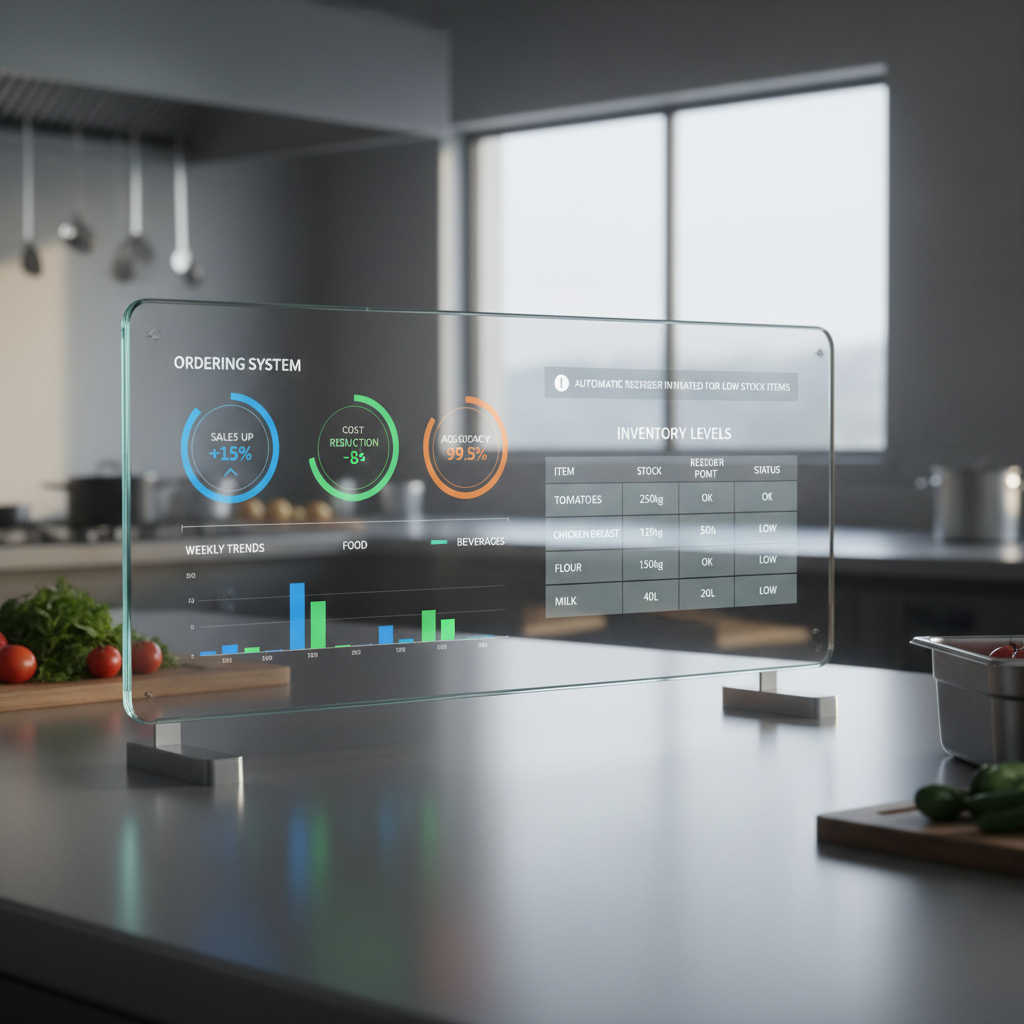
What Is a Smart Ordering System And When Does It Shine?
A smart ordering system, often powered by advanced software and artificial intelligence, automates and optimizes the procurement process for food distributors. It moves far beyond simple order entry, integrating with inventory management, sales data, and even market trends to make intelligent purchasing recommendations. These systems are designed to enhance efficiency, reduce waste, and improve overall supply chain responsiveness.
Benefits of Smart Ordering Systems for Food Distributors
The smart ordering systems benefits for food distributors are extensive and transformative, impacting nearly every facet of operations.
- Optimized Inventory Management:
- Reduces overstocking and costly spoilage by accurately predicting demand based on historical sales data, seasonality, and promotions.
- Prevents stockouts by automatically reordering popular items when they reach pre-defined thresholds.
- Improves cash flow by tying up less capital in excess inventory.
- Enhanced Operational Efficiency:
- Automates repetitive tasks like order generation, freeing up staff to focus on more strategic activities.
- Speeds up the order cycle from placement to delivery, improving customer satisfaction.
- Reduces administrative burden associated with manual data entry and reconciliation.
- Cost Reduction:
- Minimizes human errors that lead to incorrect orders, returns, or logistical nightmares.
- Optimizes purchasing decisions, potentially unlocking better supplier pricing through bulk orders or strategic timing.
- Lowers labor costs by automating tasks that previously required significant manual effort.
- Improved Accuracy and Data Visibility:
- Provides real-time visibility into inventory levels, order status, and supplier performance.
- Generates precise reports and analytics, offering actionable insights for strategic planning.
- Ensures data integrity across the entire supply chain, from warehouse to delivery.
- Scalability and Growth:
- Supports business expansion without the need for a proportional increase in staffing or manual overhead.
- Integrates seamlessly with other business systems, such as accounting and CRM software, creating a unified ecosystem.
- Facilitates entry into new markets by handling increased complexity and volume with ease.
When to Choose a Smart Ordering System
A smart ordering system becomes an indispensable asset when your food distribution business faces specific challenges or growth opportunities. Consider this option if:
- Your inventory is complex and large, with many SKUs and varying shelf lives.
- You experience frequent stockouts or excessive spoilage, leading to lost sales or waste.
- Your operational costs are rising due to manual errors, inefficient processes, or high labor expenditures.
- You aim for significant business growth and need a system that can scale without bottlenecking.
- You lack clear data insights into your purchasing patterns, supplier performance, or customer demand.
- You want to streamline your supply chain management and enhance overall responsiveness.
Our suite of products, including smart ordering solutions, is specifically designed to address these very challenges for distributors.
What Are Manual Ordering Systems And When Do They Win?
Manual ordering systems encompass any method that relies heavily on human input and non-automated processes for managing orders. This can range from handwritten lists and spreadsheets to phone calls, emails, and fax machines. While seemingly outdated in many contexts, manual systems still hold a niche for certain types of operations.
Characteristics and Limited Benefits of Manual Ordering Systems
While the smart ordering systems benefits for food distributors are clear, manual methods do have their own specific, albeit limited, applications.
- Direct Human Interaction: Can foster strong personal relationships with a small, consistent base of suppliers and customers through direct communication.
- Low Initial Cost: Requires minimal upfront investment in software or hardware, making it accessible for start-up businesses with very tight budgets.
- Immediate Flexibility (Small Scale): Allows for quick, on-the-spot adjustments to orders without navigating complex software, assuming the volume is extremely low.
- Simplicity: For operations with a very limited number of SKUs and a predictable, small customer base, the process can appear straightforward initially.
When to Choose a Manual Ordering System
Manual ordering systems are generally suitable only for specific, often temporary, scenarios in food distribution. This approach might be acceptable if:
- Your business is exceptionally small, perhaps a sole proprietorship, with a very limited number of products and customers.
- Your order volume is extremely low and highly infrequent, making automation overkill.
- You operate in a highly niche market where unique, custom orders are the norm, and personalized communication is paramount over efficiency.
- You are a brand new startup with virtually no capital to invest in technology, and this is a short-term solution.
- Your business model fundamentally prioritizes human touchpoints over efficiency and scale, though this is rare in distribution.
However, even in these scenarios, the long-term costs of errors, time consumption, and lack of scalability quickly outweigh the initial simplicity.

How Fit Changes The Decision
The “best” ordering system isn’t universal; it’s entirely dependent on the specific needs, scale, and aspirations of your food distribution business. A system that perfectly suits a small, local artisan distributor might be a catastrophic bottleneck for a large regional player. Understanding your operational fit is crucial for making the right investment.
Key Factors Influencing Your Choice
- Business Size and Scale:
- Small to Micro Distributors: With minimal inventory and a handful of clients, a manual system *might* suffice initially, though smart systems still offer long-term advantages.
- Medium to Large Distributors: High volumes, diverse product lines, and numerous suppliers/customers make manual systems unsustainable and prone to failure. Smart systems are essential for managing complexity efficiently.
- Inventory Complexity:
- Simple Inventory: A few products with long shelf lives are easier to manage manually.
- Complex Inventory: Fresh produce, dairy, frozen goods, and thousands of SKUs require sophisticated tracking, expiry date management, and demand forecasting that only smart systems can provide.
- Growth Ambitions:
- Stagnant or Niche: If your business intends to remain at its current small size without expansion, the urgency for automation is lower.
- Growth-Oriented: Businesses planning to expand product lines, client base, or geographic reach *must* invest in smart systems for scalability.
- Budget and Resources:
- Limited Upfront Budget: Manual systems have low initial costs but higher operational costs over time.
- Investment Capacity: Smart systems require an initial investment but deliver significant ROI through efficiency and reduced waste, embodying key smart ordering systems benefits for food distributors. Consider solutions like Prosessed which can offer scalable pricing.
- Customer Expectations:
- Modern B2B customers expect fast, accurate, and transparent order processing. Manual systems often fall short of these expectations, leading to dissatisfaction.
Real Life Scenarios
Let’s consider how different food distributors might approach the decision between smart and manual ordering systems. These scenarios highlight the practical implications of each choice.
Scenario 1: The Rapidly Expanding Regional Distributor
A regional food distributor has successfully grown its client base from 50 to 300 restaurants and grocery stores in just three years. Their product catalog now includes over 1,500 SKUs, including fresh produce, dry goods, and specialty items. They are still using a combination of spreadsheets, email, and phone calls for ordering.
Decision: A smart ordering system is critical. The manual system is causing frequent errors, missed orders, stockouts of popular items, and significant staff burnout due to overwhelming data entry. Implementing a smart system will automate demand forecasting, optimize inventory turns for perishable goods, reduce order processing time, and provide real-time visibility across their expanding operations. This is where the core smart ordering systems benefits for food distributors truly shine.
Scenario 2: The Niche Artisan Cheese Supplier
A small, family-run business specializes in distributing high-end artisan cheeses to a select group of 20 gourmet restaurants and specialty shops. They have a very limited product range (around 30 unique cheeses) and highly personalized relationships with both their producers and customers. Orders are often small, bespoke, and involve direct communication about specific aging or availability.
Decision: While a smart system could eventually be beneficial for detailed financial tracking, a manual system might still function adequately in this very specific, small-scale context for *order placement only*. However, even here, a simple digital system for inventory tracking and invoicing would be a significant upgrade, mitigating the risks of manual errors. For any growth, they would quickly need to transition.
Scenario 3: High-Volume Frozen Goods Distributor
A large distributor handles thousands of units of frozen goods daily for national supermarket chains. Their inventory management is extremely time-sensitive due to cold chain requirements, and errors can result in massive financial losses from spoilage. Their current system is a mix of outdated software and manual reconciliation.
Decision: An immediate upgrade to a fully integrated smart ordering and inventory management system is imperative. The sheer volume and critical nature of their products demand automation, real-time tracking, precise forecasting, and seamless integration with logistics and cold chain monitoring. The smart ordering systems benefits for food distributors are most pronounced in such high-stakes environments, directly impacting compliance and preventing expensive waste. This company also benefits from robust inventory management capabilities.
Common Myths About Ordering Systems
Navigating the transition or decision between ordering systems often involves encountering various misconceptions. Let’s debunk some common myths.
- Myth 1: “Smart systems are only for huge companies.”
Reality: While enterprise solutions exist, many scalable smart ordering systems are now affordable and accessible for small to medium-sized food distributors, offering immediate ROI. - Myth 2: “Manual ordering is cheaper because there’s no software cost.”
Reality: The true cost of manual ordering includes significant labor hours, high error rates, lost sales from stockouts, and waste from overstocking. These hidden costs often far exceed software subscription fees. - Myth 3: “Smart systems are too complicated to learn.”
Reality: Modern smart ordering platforms prioritize user-friendliness with intuitive interfaces and comprehensive training resources. Many offer guided onboarding to ensure a smooth transition. - Myth 4: “My team prefers the old way.”
Reality: While resistance to change is natural, once staff experience the benefits of reduced manual work, fewer errors, and improved efficiency, they typically embrace the new system. Automation frees them for more engaging tasks. - Myth 5: “I’ll lose personal touch with suppliers if I automate.”
Reality: Smart systems automate routine order placement, allowing your team to focus on building stronger strategic relationships with suppliers, negotiating better terms, and resolving complex issues, rather than just data entry. - Myth 6: “My business is too unique for a smart system.”
Reality: Many smart ordering solutions offer customization and flexibility to adapt to specific industry needs, including varying product attributes, delivery schedules, and customer requirements unique to food distribution.
So… Smart Ordering System Or Manual?
For the vast majority of food distributors today, the decision leans heavily towards implementing a smart ordering system. The undeniable smart ordering systems benefits for food distributors—including enhanced efficiency, significant cost savings, superior accuracy, and robust scalability—make them an indispensable tool in a competitive market. Manual systems, while seemingly simple upfront, ultimately hobble growth, drain resources through inefficiency, and leave businesses vulnerable to human error.
Decision Guide
To make your final decision, ask yourself these critical questions:
- What is your current order volume and inventory complexity? High volume, many SKUs, and perishable goods strongly dictate a smart system.
- What are your growth ambitions for the next 3-5 years? If you plan to expand, a smart system is non-negotiable for sustainable growth.
- How much are errors, waste, or stockouts currently costing you? Quantify these losses; they often justify the investment in a smart system.
- How much time does your team spend on manual ordering tasks? Reallocate that valuable time to strategic initiatives with automation.
- What level of data visibility and insight do you need? Smart systems provide the analytics required for proactive decision-making.
If you find yourself nodding to the advantages of automation and data-driven decision-making, it’s time to explore the transformative power of smart ordering systems. Start your journey towards optimized operations by exploring solutions that empower your business to thrive. Visit our blog for more insights into distribution technology.
Sources
- Supply Chain Management – Wikipedia
- Inventory Management – Wikipedia
- Automation – Wikipedia
- Food Service – Wikipedia
- Food safety – World Health Organization
Frequently Asked Questions (FAQ)
Q1: How quickly can a smart ordering system show ROI for a food distributor?
A: The return on investment (ROI) for a smart ordering system can be surprisingly quick, often within months. This is due to immediate reductions in waste, errors, and labor costs, coupled with improved efficiency and customer satisfaction. Factors like your current level of inefficiency and the chosen system’s features will influence the exact timeline.
Q2: Can a smart ordering system integrate with my existing accounting software?
A: Most modern smart ordering systems are designed with integration capabilities. They can typically connect seamlessly with popular accounting software, CRM systems, and other operational tools, creating a unified data flow and eliminating duplicate data entry. Always check for specific integrations before committing to a system.
Q3: What if my food distribution business has seasonal demand fluctuations?
A: Smart ordering systems are particularly effective for businesses with seasonal demand. They utilize historical data, real-time sales trends, and even external factors to forecast demand more accurately, ensuring you are adequately stocked during peak seasons and avoid overstocking during off-peak periods, thereby maximizing smart ordering systems benefits for food distributors.
Q4: Is it possible to implement a smart ordering system gradually?
A: Yes, many providers offer modular solutions or phased implementation strategies. You might start with core ordering and inventory management features and then expand to more advanced functionalities like demand forecasting or supplier management as your team becomes comfortable and your needs evolve. This flexible approach allows for a smoother transition.
Leave a Reply